
Officiating an outdoor tournament means hours in the blazing sun, hustling up and down the field. The best way to keep our skin safe during these long, hot days? Reliable sunscreen gear actually made for referees. Sunburns aren’t just annoying—they throw us off our game and can mess with our health.
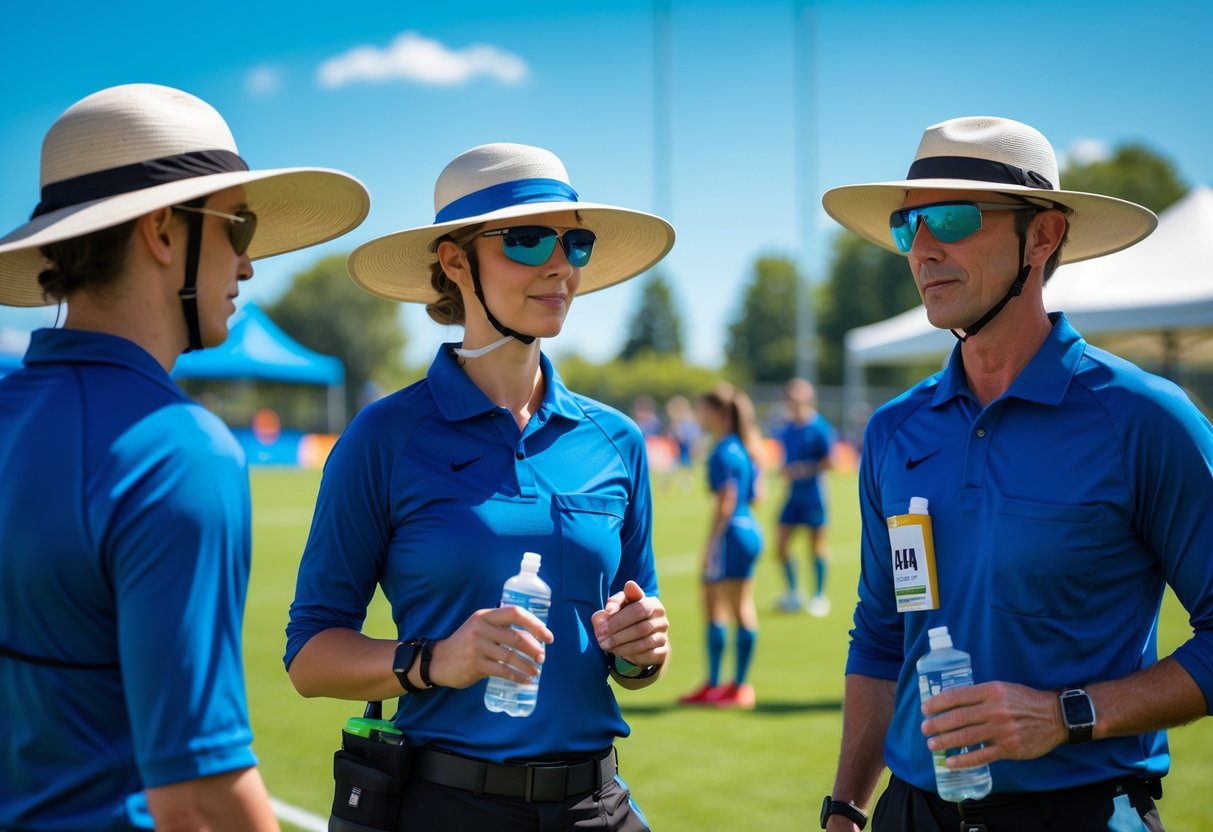
Let’s get into the best sunscreen products that actually stick around, protective clothing that’s easy to throw on, and some quick tricks for reapplying between matches. It’s about making sun safety a no-brainer so we can focus on every call, not on getting scorched.
Key Takeaways
- Good sunscreen gear keeps us in the game, not out with a burn.
- The right clothes and products make sun safety almost effortless.
- Smart sunscreen habits help us ref with confidence.
Choosing Sunscreen for Referees
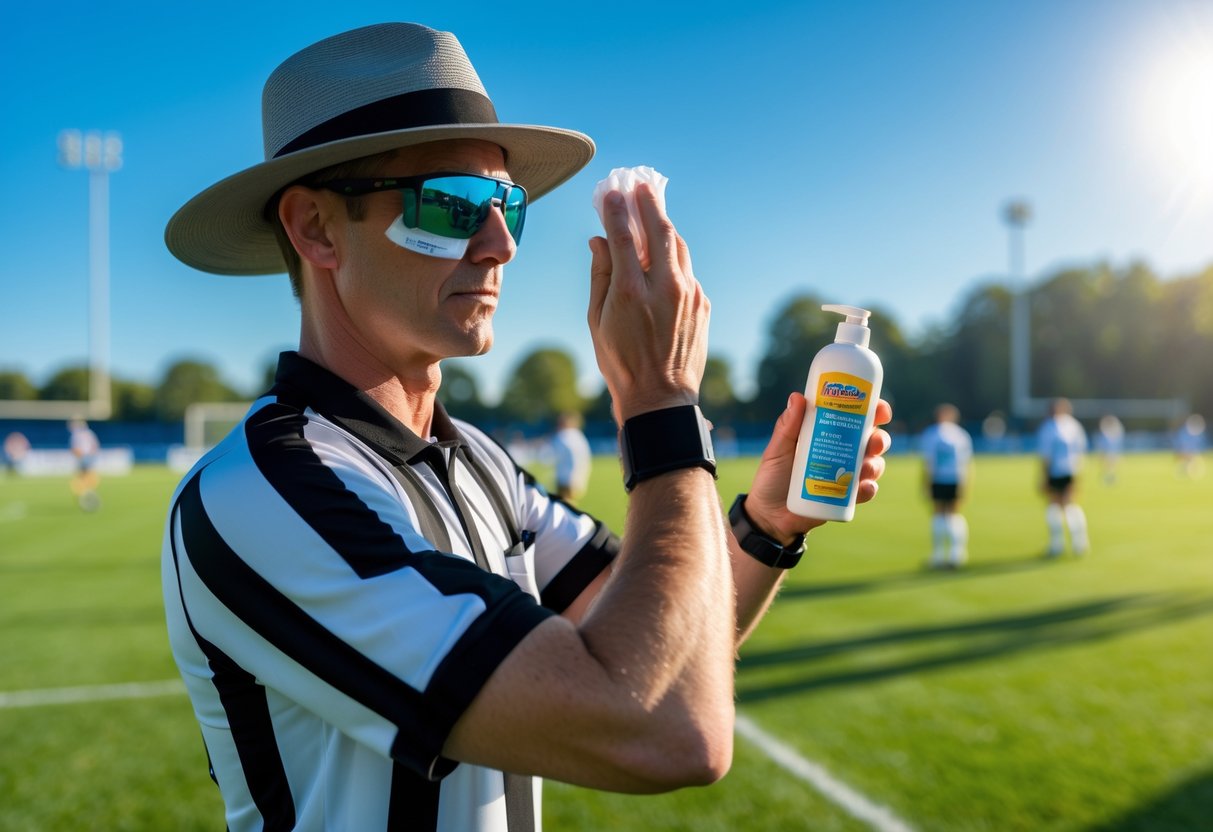
A full day in the sun is brutal, especially when we’re running nonstop. The right sunscreen lets us focus on the match, not on stinging eyes or sticky skin.
SPF Ratings and Broad-Spectrum Protection
High SPF means more protection from burning rays. For us, SPF 30 or higher is the way to go. It won’t last forever, but it blocks more UVB rays.
Broad-spectrum sunscreen covers both UVA (the aging stuff) and UVB (the burning stuff). This keeps skin safer long-term and helps avoid those fast, nasty sunburns. Always check for broad-spectrum on the label, and don’t forget spots like ears, neck, and the backs of hands.
Quick cheat sheet:
| Feature | What to Look For |
|---|---|
| SPF Level | 30 or higher |
| Broad-Spectrum | Yes (protects UVA/UVB) |
| Application Area | Face, neck, arms, ears |
Water and Sweat Resistance
We sweat—a lot—when we’re out there. Sweat and water wash sunscreen off fast, so grab formulas marked water-resistant (usually 40 or 80 minutes).
That just means the sunscreen won’t vanish right away if we sweat or towel off. Still, we need to reapply every two hours, or sooner if we’re really dripping.
Sticks or sprays make reapplying less of a mess. And hey, smaller bottles actually fit in a pocket or ref bag, so we’re more likely to use them.
Non-Greasy and Quick-Absorb Formulas
Nobody wants sunscreen running into their eyes or making their hands slippery. Go for non-greasy and quick-absorb types.
Gel, lotion, or stick formulas made for sports usually dry fast and won’t stain uniforms. “Dry touch” or “sport” labels are good signs. If your skin’s picky, fragrance-free and dye-free options can help avoid itching or breakouts.
Top Sunscreen Products for All-Day Coverage
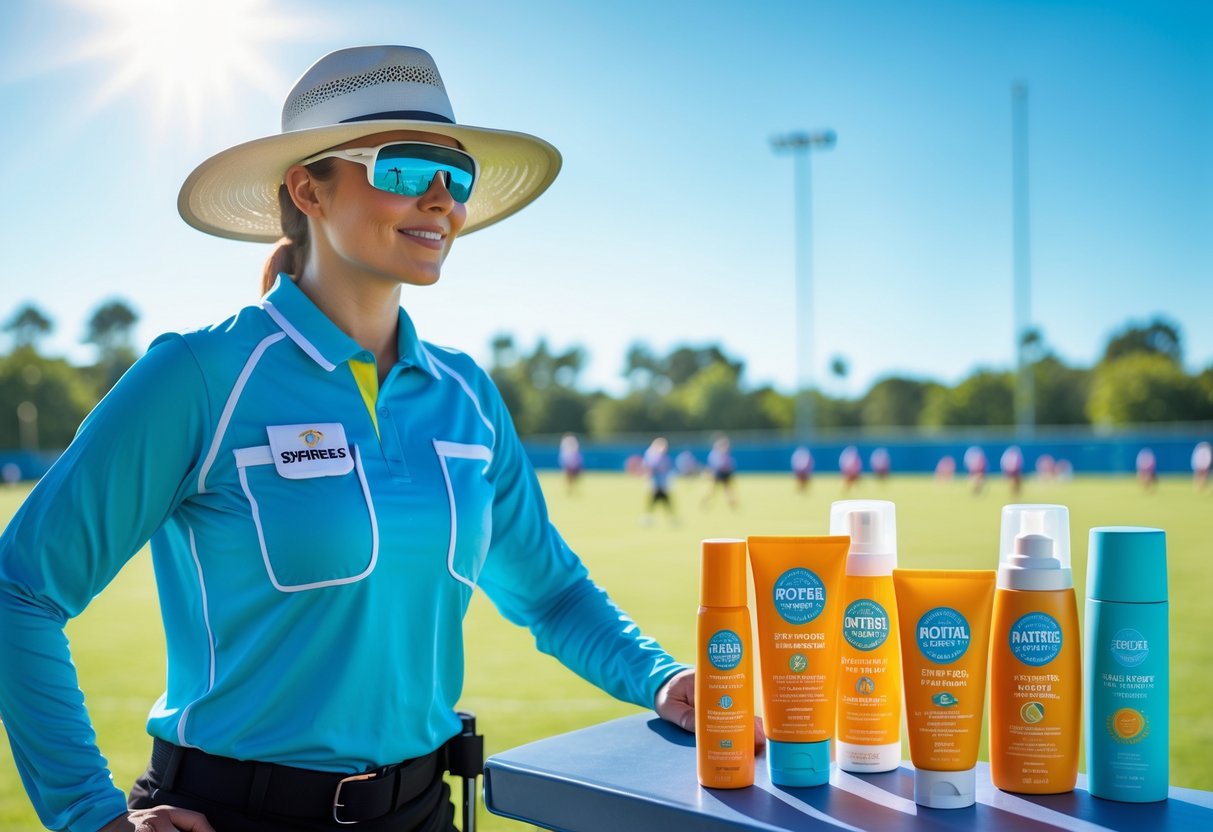
We need sunscreen that stays put through sweat, sun, and long hours. The right formula means less stress about reapplying every five minutes.
Mineral Versus Chemical Sunscreens
Mineral sunscreens (zinc oxide or titanium dioxide) sit on top of the skin and bounce UV rays away. Chemical ones (like avobenzone or octinoxate) soak up UV rays and turn them into heat.
Mineral options are usually gentler, work right away, but can leave a white cast. Chemical sunscreens tend to go on clear and feel lighter, but might need more frequent reapplication if you’re sweating buckets.
For all-day tournaments, we like broad-spectrum and SPF 30 or higher. Mineral picks like Neutrogena Sheer Zinc and Blue Lizard Sport are great if you’ve got sensitive or sweaty skin. On the chemical side, Coppertone Sport and Banana Boat Ultra Sport hold up well during intense games.
Best Sprays, Lotions, and Sticks for Referees
We rarely stand still, so fast and easy application matters. Sprays cover big areas quickly, though wind can mess things up. Lotions give even coverage but can get messy if you’re in a rush.
Sticks are perfect for quick touch-ups on the face, ears, and neck—no greasy hands. Sun Bum Mineral SPF 50 Stick and Neutrogena Sports Face Stick fit in any pocket.
For sprays, Banana Boat Ultra Sport Sunscreen Spray SPF 50 is a solid pick. For lotions, EltaMD UV Sport SPF 50 and Coppertone Sport Lotion SPF 50 feel good and resist sweat. Here’s a quick comparison:
| Type | Recommended Product | Key Features |
|---|---|---|
| Lotion | EltaMD UV Sport SPF 50 | Sweat-resistant, fragrance-free |
| Spray | Banana Boat Ultra Sport Spray SPF 50 | Fast application, broad coverage |
| Stick | Sun Bum Mineral SPF 50 Stick | Pocket-sized, easy for touch-ups |
Protective Clothing and Accessories
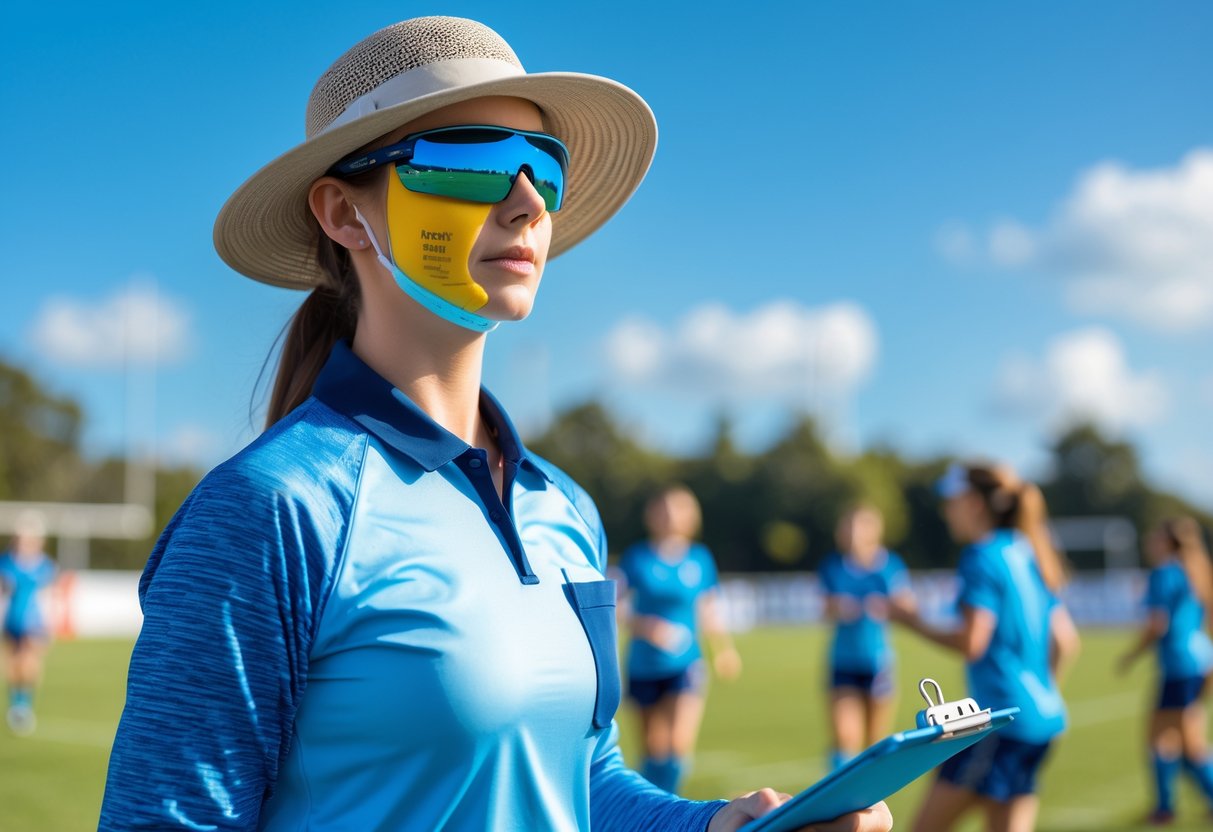
Sunscreen isn’t the whole story. What we wear—shirts, hats, sunglasses—makes a huge difference in staying comfortable and protected.
UPF Referee Shirts and Jerseys
UPF-rated clothing is a game-changer. UPF (Ultraviolet Protection Factor) gear actually blocks UV rays, unlike regular shirts.
You can get lightweight referee jerseys with UPF 30 or higher (50+ is even better for all-day gigs). They’re usually moisture-wicking and breathable, so you won’t roast. Some brands make them in classic black or stripes, so you don’t have to ditch your usual style.
Look for mesh panels for airflow, reinforced seams for durability, and tagless collars for comfort. Always check the label for the UPF rating.
Wide-Brimmed Hats and Caps
Our face, ears, and neck burn fast—especially out there in the afternoon.
A brim of at least 3 inches all around beats a regular cap every time. Bucket and safari hats work well, giving shade without blocking your view. Adjustable straps keep them on in the wind, and mesh vents help you stay cool.
If you like the classic look, umpire caps with longer bills protect your face a bit more. Still, wider brims win for sun defense.
Polarized Sunglasses for Eye Protection
All-day refereeing can fry your eyes with glare from the field and uniforms. Polarized sunglasses cut glare and ease eye strain.
Look for “100% UV protection” or “UV400” labels—those block both UVA and UVB rays. Wrap-around styles are best for stopping sunlight from sneaking in the sides.
Sports sunglasses with rubber grips won’t slide off when you’re running. Anti-fog and scratch-resistant coatings are handy for long tournaments. Toss a case in your bag to keep them from getting crushed.
Application Tips for Maximum Protection
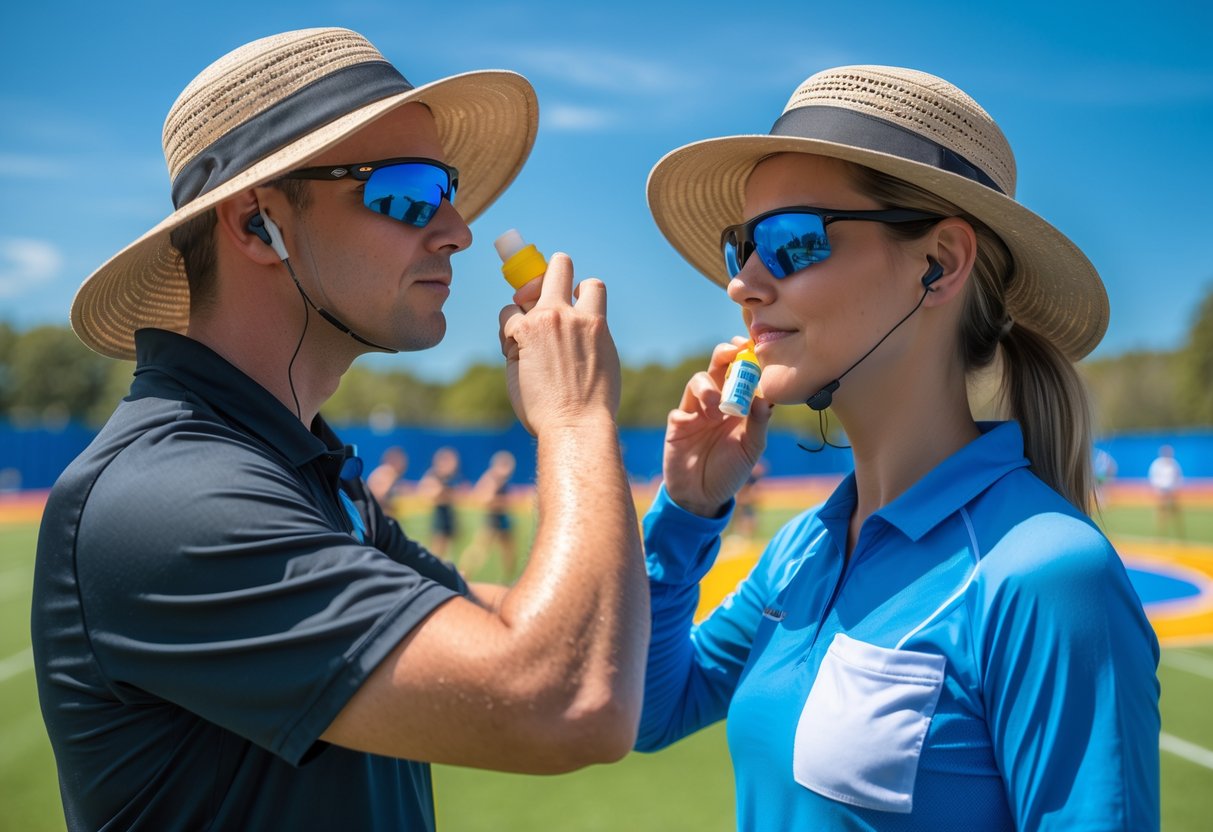
Long hours in the sun will catch up with your skin if you’re not careful. Using sunscreen right—and not missing key spots—really matters.
How to Effectively Reapply Sunscreen During Matches
Reapplying every two hours is a must, and even sooner if you’re sweating hard or toweling off.
Keep a travel-sized sunscreen in your pocket or waist pack. Mineral stick sunscreens work great for faces—no messy hands, and you’re back to officiating in seconds. Sprays and wipes cover arms and legs fast, no fuss.
When you get a short break, hit high-sweat spots like nose, forehead, and cheeks. Setting a timer on your watch or phone helps—easy to lose track when you’re busy.
Covering Ears, Neck, and Other Commonly Missed Areas
It’s easy to forget certain spots. Here’s a quick list of the most-missed areas:
- Ears: Don’t just dab the lobes—get behind and on top.
- Neck: Sides and back, under your collar.
- Scalp: If your hair’s short or thin, use sunscreen or a hat.
- Back of knees and hands: Shorts and waving arms mean these spots get hit.
Take a few seconds before the first whistle to cover these areas. If you wear sunglasses, swipe sunscreen along the edges and temples too. It’s a pain if you miss these spots—they burn fast and heal slow.
Gear for On-the-Go Sunscreen Application
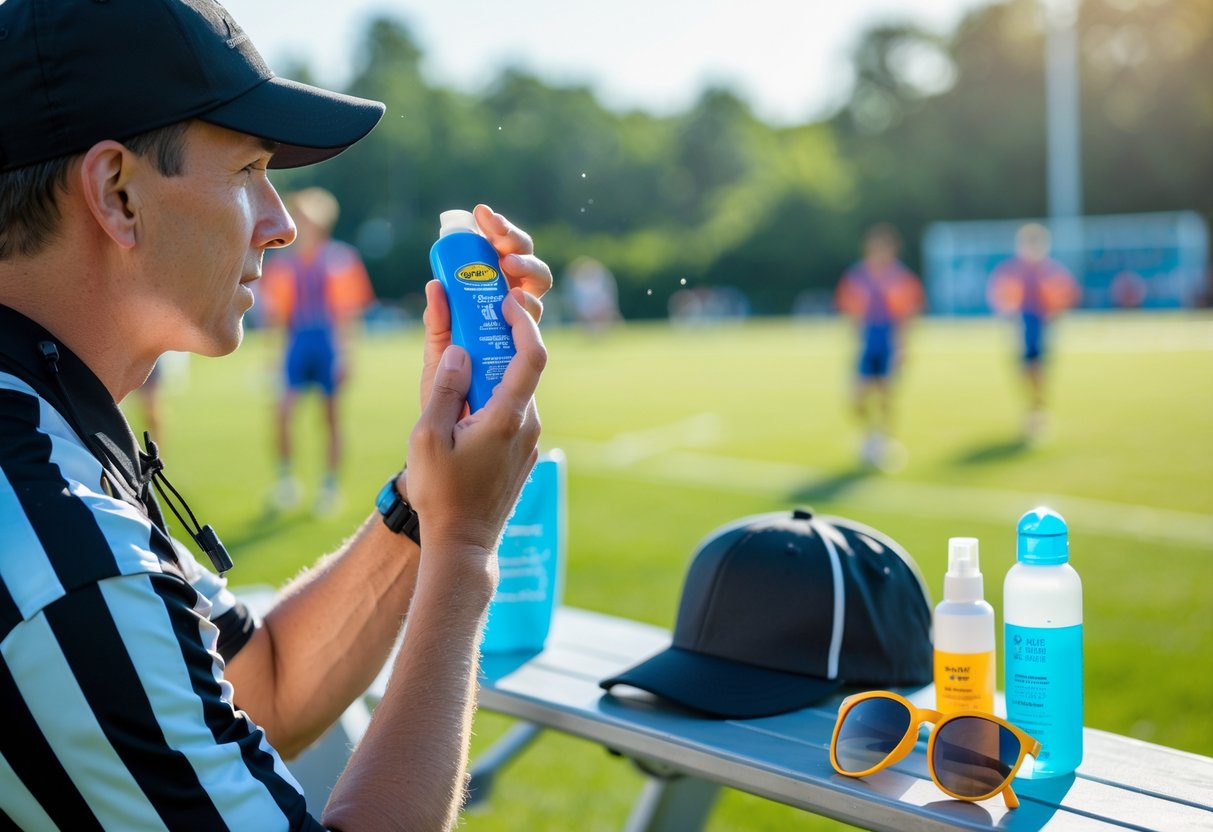
Refereeing outside all day? It’s rough. Keeping sunscreen handy and easy to use makes a real difference—especially when sanitizer and sweat are in the mix.
Portable Sunscreen Dispensers
Big sunscreen bottles are a pain to carry, and we’re always in a hurry. Pocket-sized sticks, mini squeeze bottles, or clip-on sprays are where it’s at. They fit in shorts pockets, on a lanyard, or a belt loop. Solid sticks or compact sprays let you slap on a fresh layer in seconds—even during a water break.
Quick rundown:
| Type | Best For | Pros | Cons |
|---|---|---|---|
| Stick | Face, ears, neck | No mess, easy to use | Needs rubbing in |
| Spray | Arms, legs, back | Fast, covers large areas | Can miss spots |
| Mini Bottle | Any exposed skin | Works with any sunscreen | Slightly more to carry |
Small dispensers cut down on waste and make it easier to see when you’re running low.
Hand Sanitizer Compatibility and Skin Safety
Hand sanitizer’s everywhere now, but it can mess up sunscreen. If you use sanitizer right after sunscreen, it can break down the protection and dry your skin fast.
Look for sunscreens labeled “water-resistant” or “alcohol-resistant” for your hands. These hold up better after sanitizer. You can also reapply sunscreen after sanitizing—just wait until your hands are dry first.
Unscented and “sensitive skin” products help avoid irritation. Toss a moisturizer in your bag, too. Sun and sanitizer together can really dry you out. Paying attention to how these products mix keeps your skin happier and healthier all day.
Sunscreen Safety and Skin Health for Referees
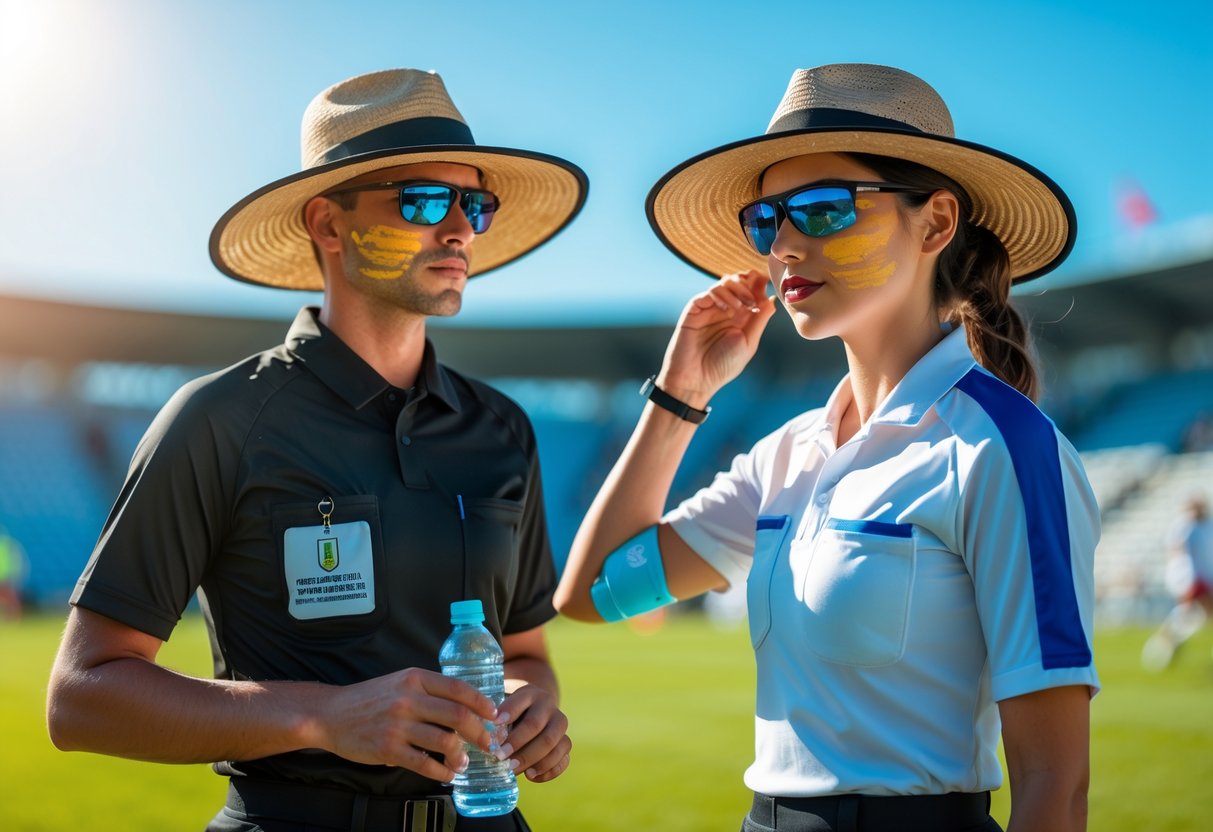
Staying safe under the sun isn’t just about slathering on sunscreen and hoping for the best. We’ve got to keep our skin comfortable and healthy during those endless hours out on the field, too.
Avoiding Allergic Reactions and Irritations
Even the fanciest sunscreen can bug our skin sometimes. It’s a good call to stick with "hypoallergenic" and "fragrance-free" products, especially if you’ve had reactions before. Testing a new sunscreen on a small patch of skin—say, your arm or neck—before going all-in is just smart.
A couple things to keep in mind:
- Avoid: Sunscreens packed with alcohol, artificial dyes, or heavy scents.
- Look for: Mineral sunscreens with zinc oxide or titanium dioxide.
- Check: Expiration dates. Old sunscreen can get weird and irritate your skin.
If you spot redness, itching, or burning, just wash it off right away. Hats and long sleeves can help you skip extra sunscreen on sensitive spots, too.
Post-Tournament Skin Care and Hydration
After a long, sunny day, your skin needs a break. Try to shower soon to get rid of sweat, sunscreen, and grime. Gentle, fragrance-free cleansers are best—no need to make things worse.
Moisturizer comes next. Thick creams or lotions with aloe vera, glycerin, or ceramides help your skin bounce back. And yeah, don’t forget water. Hydration really does make a difference.
Here’s a quick routine that works for most of us:
- Shower with lukewarm water.
- Pat skin dry—rubbing just makes irritation worse.
- Apply moisturizer right after drying off.
- Drink water throughout the evening.
A little post-game care goes a long way. You’ll feel better and be ready for whatever’s next.
Sun Safety Strategies for Long Tournament Days
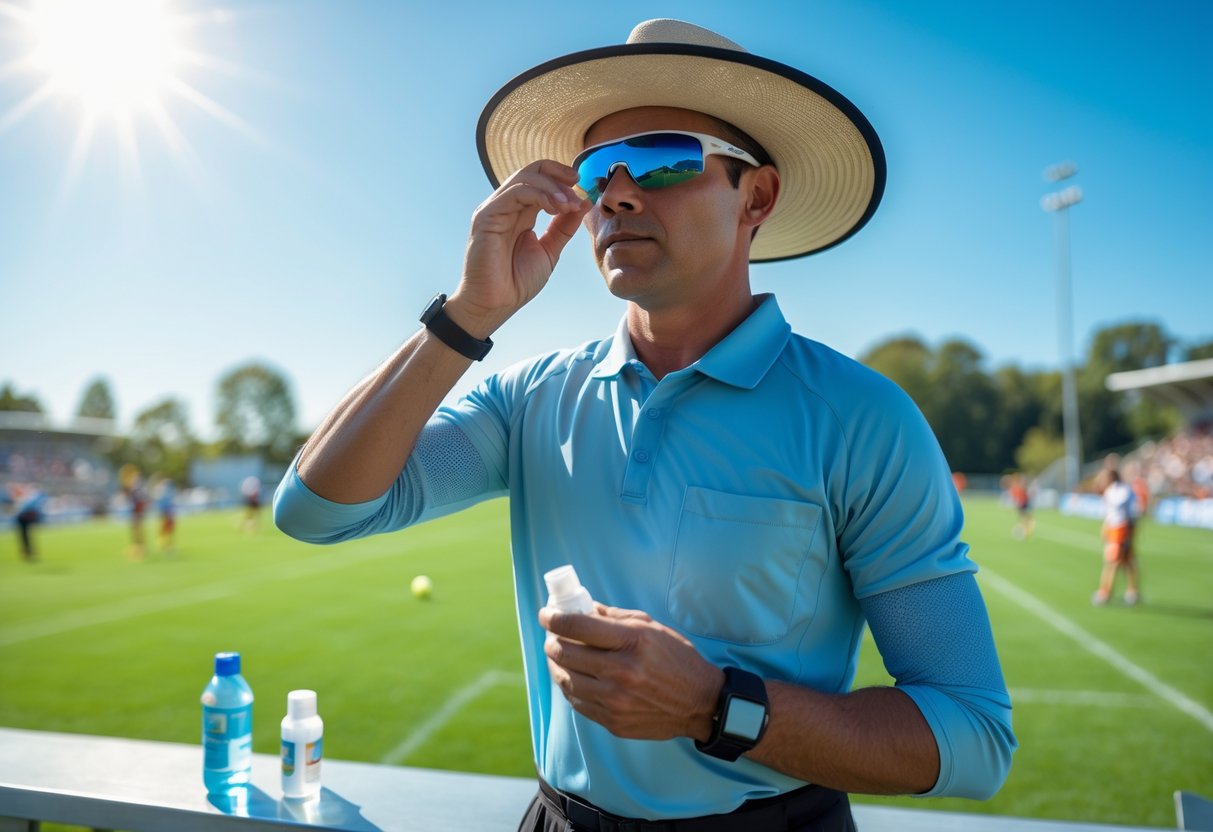
We get a ton of sun as referees. Staying safe means making some smart choices about where we spend our downtime during tournaments.
Timing and Shade Usage Between Games
Hanging out in the sun during breaks just wears us out and cranks up the risk of sunburn. Always hunt for shade—a tent, tree, or even the shady side of a building works. If there’s nothing, a pop-up umbrella or a portable canopy can be a lifesaver.
It’s easy to forget, but halftime or water breaks are perfect for reapplying sunscreen. Toss these tips in your mental checklist:
- Find shade: Rest in shaded spots when you can.
- Reapply sunscreen: Every two hours, or sooner if you’re sweating buckets.
- Protect your gear: Keep hats and sunglasses handy during breaks.
Little habits like these add up. They’ll keep you safer out there, even if the sun’s relentless.
Frequently Asked Questions
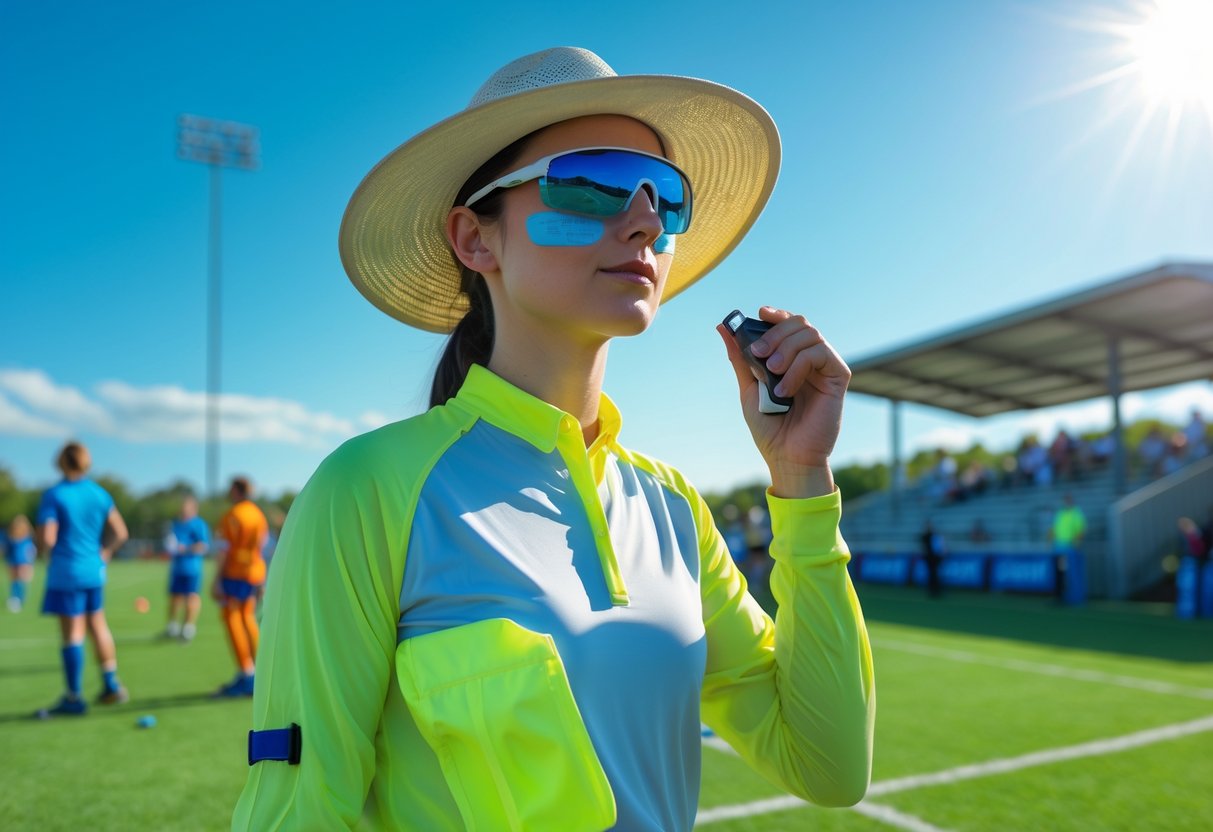
We all want to stay sun-safe and focused, but the right gear and sunscreen choices really do matter on the field.
What SPF level do referees need for full-day outdoor coverage?
Go for SPF 50 or higher if you’re out all day. More time in direct sun means you need that extra defense.
Honestly, most people don’t use enough. Make sure you cover every bit of exposed skin—otherwise, the SPF rating drops fast.
Are there water-resistant sunscreens that can keep up with a referee's active day?
Absolutely. Lots of broad-spectrum sunscreens are made for sports, with water resistance lasting 40 or 80 minutes.
Look for "sport" or "active" on the label—they’re designed to stick through sweat and movement.
Can sportswear with UV protection reduce the need for sunscreen for field officials?
UV-protective clothing labeled UPF 50+ blocks out most rays—shirts, hats, leggings, you name it.
But don’t skip sunscreen on your face, hands, or any other exposed skin. The clothes help, but they don’t cover everything.
How often should referees reapply sunscreen during day-long matches?
Every two hours is the rule, or sooner if you’re sweating a lot or toweling off.
A quick touch-up on your shoulders, neck, and face between games is always a good idea.
What forms of sunscreen are best for quick application during game breaks?
Sprays and sticks are fast and don’t make a mess. Toss one in your bag and you’re set.
Sticks work well for your face, nose, and ears. Sprays make it easy to cover your arms and legs in seconds.
Aside from lotions, what other sunscreen gear helps protect referees from the sun?
Wide-brimmed hats, UV-blocking sunglasses, and neck gaiters all give that extra layer of protection. On those blazing days, arm sleeves or even a face shield can make a surprising difference.
Honestly, sometimes it just comes down to mixing things up—whatever helps you cover up and not roast out there.