
Ever wished you had your own spot to run barefoot, feeling grass or soft earth under your toes? Designing a backyard barefoot running track lets us enjoy a natural, playful way to stay active—right at home. It’s not just about exercise, honestly. There’s something special about being outside, making a space that’s all ours.
But before we get too excited, there’s a bit to think about. We’ll look at the ups and downs, pick out which surfaces feel best, and see how to set up a track that’s both comfy and safe for bare feet. If you’re curious about building one—or just want to know what’s involved—let’s dig in and see what it takes.
Key Takeaways
- Backyard barefoot tracks make running at home way more fun.
- Good planning helps us dodge common headaches and stay safe.
- With a few steps, we can put together a track that really fits our vibe.
What Is a Backyard Barefoot Running Track?
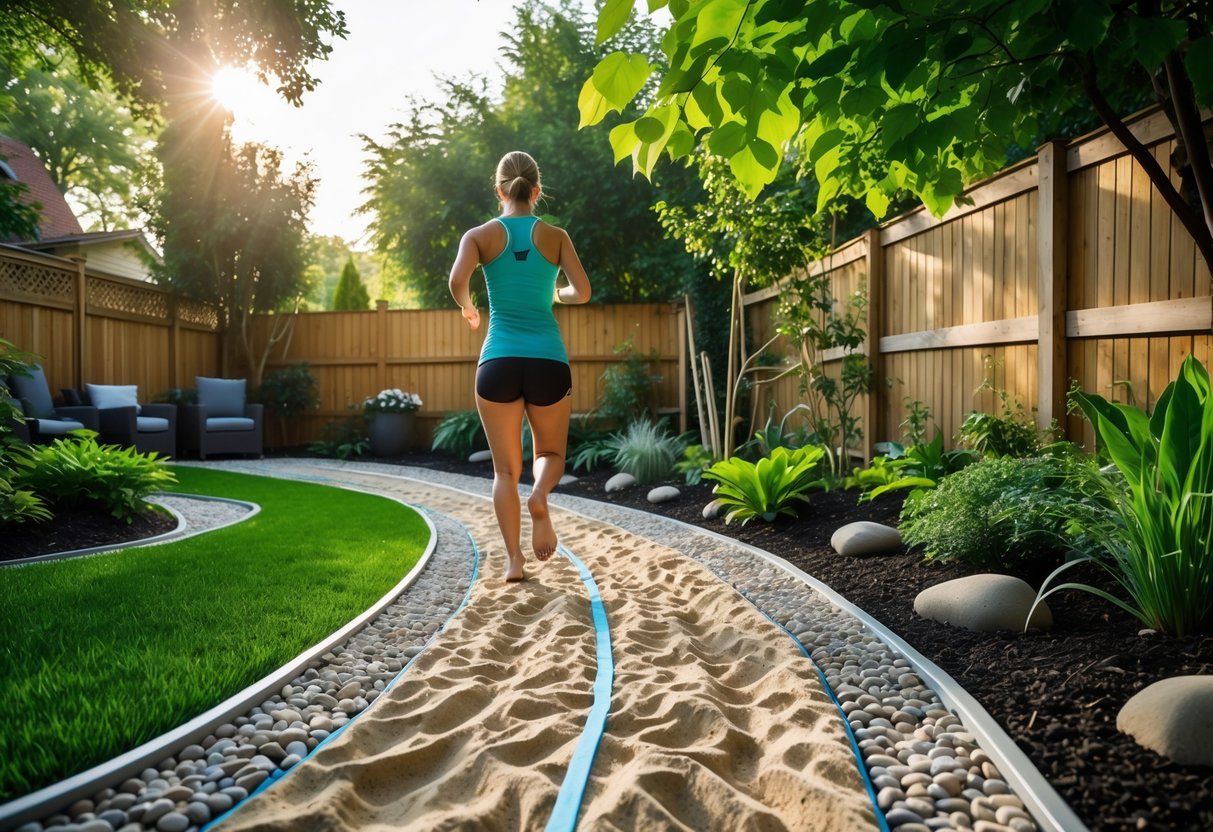
A backyard barefoot running track is a loop or path you create at home, designed so we can run without shoes. It’s a controlled, safe space for natural movement, letting our feet actually feel the ground.
Key Features of Barefoot Tracks
Barefoot tracks try to copy safe, natural surfaces. They’re usually 3 to 5 feet wide, giving us room to stretch out without bumping into the edges. Most folks go with a loop or oval—less stopping and turning, more flow.
Drainage matters. If water pools up, we’re stuck with a slippery mess. Padding’s crucial too—nobody wants to step on a sneaky stone or stick. People use wood, bricks, or even plants to border their track, which keeps everything tidy and the surface in place. Some even toss in little signs or markers for fun.
Types of Surfaces Suited for Barefoot Running
Not every surface is a winner for bare feet. We want something soft and smooth, but not so cushy we trip or sink.
- Grass: Feels awesome and easy on the joints, but it needs mowing and gets muddy after rain.
- Fine gravel or pea gravel: Kind of massages our feet and drains well. Sometimes gravel sneaks between toes, and sharp bits hurt.
- Sand: Super soft, forgiving, but honestly, it’s a pain to keep tidy. And you’ll find sand everywhere.
- Mulch or wood chips: Cushiony and comfy, but splinters and pokey bits are a risk.
- Rubber mulch: Doesn’t rot, stays springy, but can get hot if there’s a lot of sun.
Whatever we pick, we really should check for sharp stuff before running.
Benefits of Having Your Own Barefoot Track
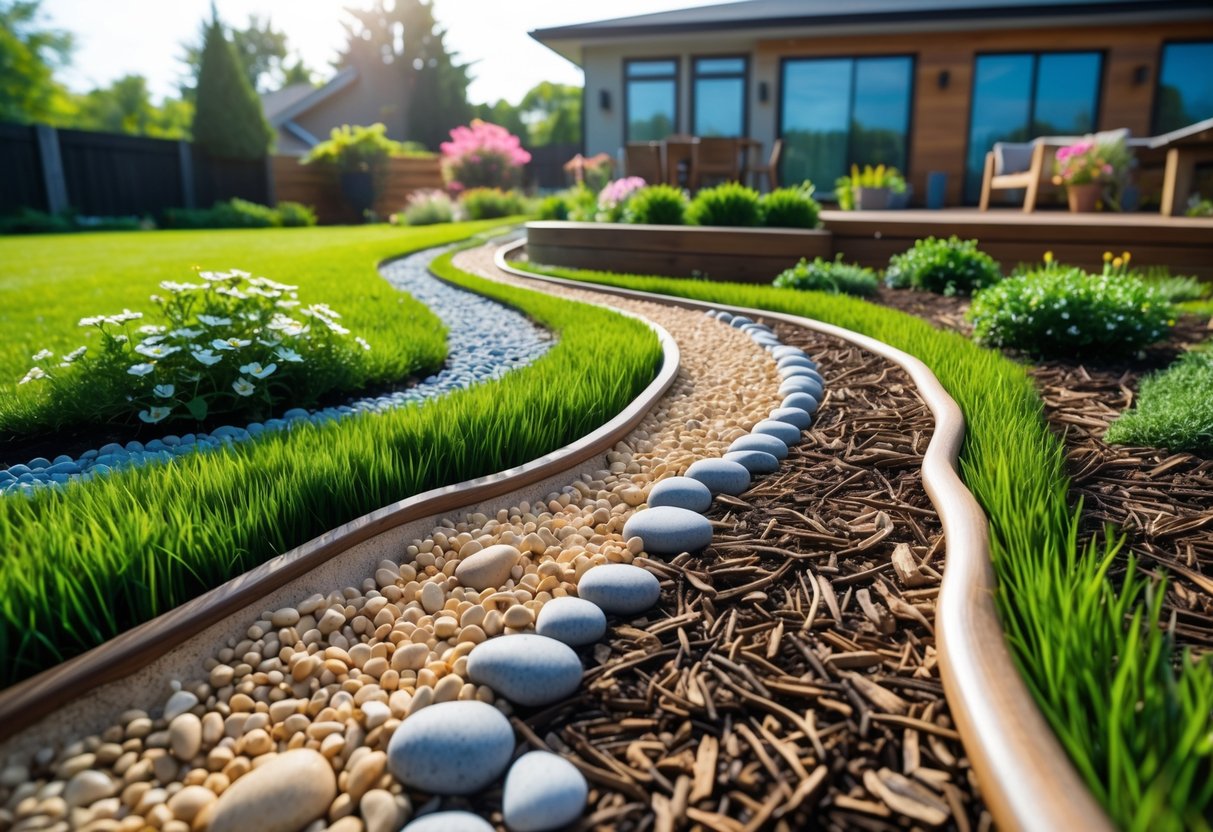
A backyard barefoot track can help us build stronger feet, clear our heads, and spend more time outside. Plus, it’s just plain handy—quick runs, no driving, no crowds.
Physical Health Advantages
Running barefoot at home wakes up muscles in our feet and toes. Without shoes, our toes grip, arches work harder, and balance improves. Many people notice fewer little aches, since barefoot running encourages us to move more naturally.
We get to pick the surface—soft grass, smooth dirt, or packed sand—so there’s less risk of stepping on something nasty. Ankles, calves, and feet get a gentle workout every lap, making them tougher over time.
If we stick with it, we might find ourselves a bit more agile and maybe bouncing back from injuries faster. But fair warning: it takes time for feet to toughen up. Patience helps a lot.
Mental Wellness Perks
Getting outside on a barefoot track can lift our mood. There’s something about feeling grass or earth underfoot—it’s a sensory thing you just can’t get on a treadmill. A few laps and the stress starts to fade, especially with the sights and sounds of the yard.
Running barefoot forces us to pay attention. Every step, every landing, we’re more in tune with our bodies. It’s a kind of moving meditation that helps us let go of daily worries.
Here’s a quick peek at a few mental perks:
| Experience | Positive Effect |
|---|---|
| Sunlight Exposure | Improved mood |
| Mindful Movement | Lower stress levels |
| Fresh Air | Sharper focus |
Altogether, it helps us feel lighter, more relaxed, and maybe a bit more connected to the world around us.
Accessibility and Flexibility
With a barefoot track in the backyard, we run when we want. No driving, no crowded trails, no waiting for a turn. That makes it way easier to stick with running, even when life gets busy or the weather’s all over the place.
We can squeeze in a quick jog before dinner or go longer on weekends. Beginners can take it slow, without feeling rushed.
It’s also handy for keeping an eye on kids or pets while getting our own workout in. No strangers, no traffic, just us doing our thing. Excuses kind of disappear when the track’s right outside.
Drawbacks and Potential Risks
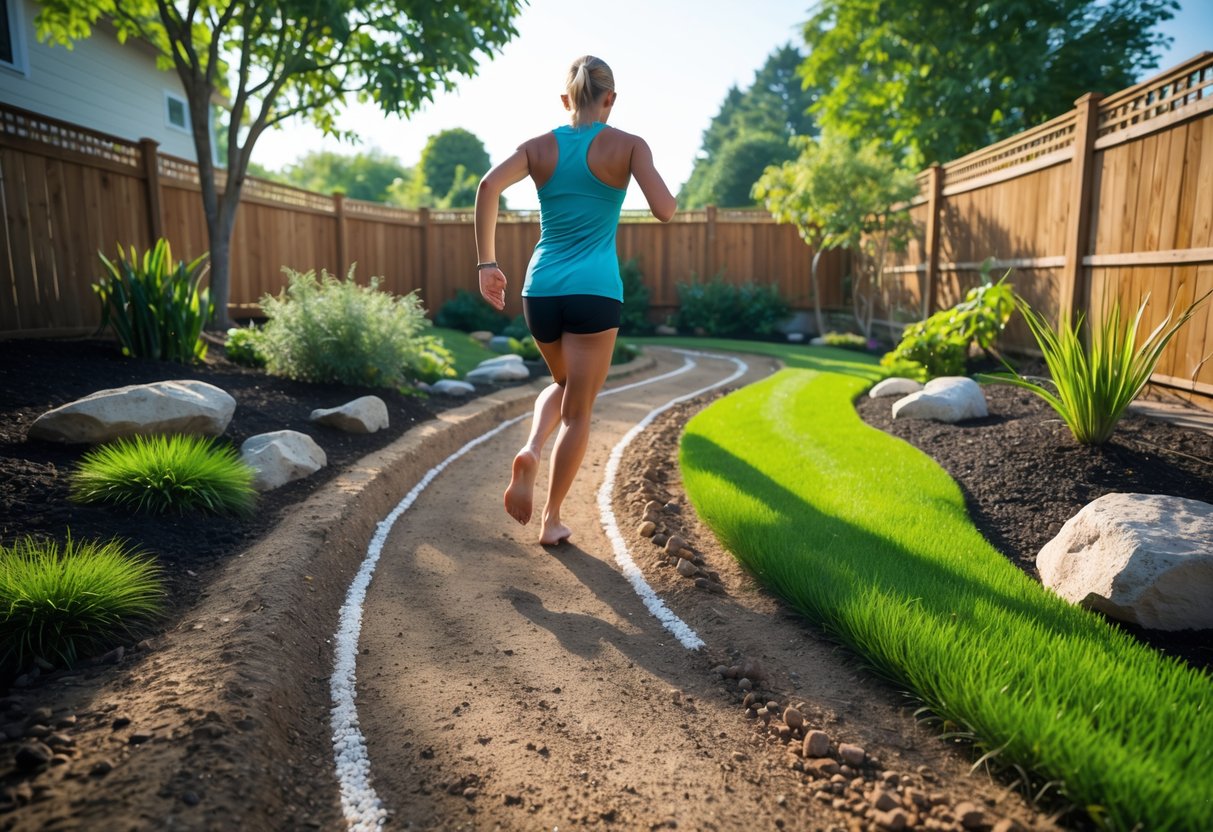
Barefoot running at home isn’t all sunshine. There are a few snags—injuries, maintenance, and weather can all throw a wrench in our plans.
Common Injuries and How to Avoid Them
Barefoot running comes with its own set of risks. Cuts, scrapes, and bruises happen if we miss a rock or stick. Stubbed toes, sunburn, and splinters sneak up if we’re not careful.
To dodge these, we should walk the track barefoot before running, pull out sharp stuff, fill holes, and keep the grass trimmed low.
It’s smart to start slow—maybe just 5 minutes at first—and build up as our feet toughen and muscles get used to it.
Maintenance Challenges
Barefoot tracks don’t take care of themselves. Dirt and grass get uneven, muddy, or overgrown. Debris—sticks, glass, pet mess—pops up fast, especially if we have trees or animals around.
We’ll need to rake and sweep every few days, mow if there’s grass, fill in holes, and check for bugs or nests.
A simple weekly routine helps. Some folks keep a rake, shovel, and trash bin handy. Letting maintenance slide turns small problems into big ones, and that’s no fun for anyone.
Weather and Seasonal Limitations
Weather changes everything. Rain makes the track slippery or muddy. After storms, there might be new hazards—branches, puddles, who knows.
Hot days heat up sand and dirt, which can burn our feet. Cold weather? That’s just uncomfortable and risky for slips or numb toes.
Best bet: skip running when it’s wet or icy, go early or late in hot weather, and maybe wear socks or take breaks when it’s freezing. Some days we’ll just have to sit it out—and that’s fine.
Planning Your Backyard Barefoot Track
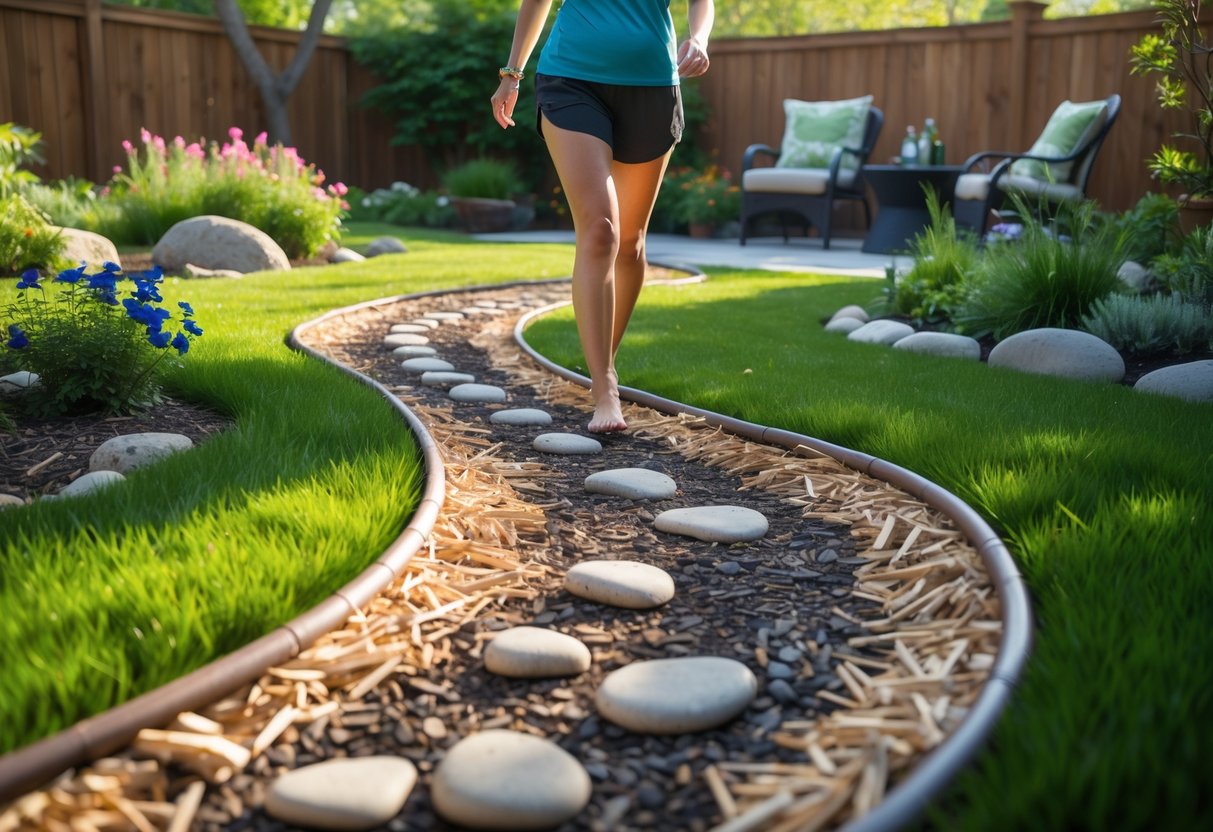
We’ll need to think about where to build, how much space we’ve got, and what it might cost. Getting the details right early saves us a ton of hassle later.
Choosing the Right Location
Yards come with all sorts of quirks—sunny spots, shady patches, weird slopes. Trees give shade, but roots can mess up the track. Flat, open ground is best for smooth running and fewer muddy surprises.
We should steer clear of steep slopes, flower beds, or playsets. That way, we don’t have to dodge obstacles or make weird turns. Being near a hose is a plus for rinsing off or watering the track.
Before digging, it’s smart to check for buried cables or pipes. Local utility services can help with that. If the area’s always soggy, drainage might be an issue—no one wants a mud pit.
Space and Layout Considerations
No need for a huge yard, but measuring helps. A short loop—maybe 20–30 meters—works for warm-ups or laps. If we want more distance, a winding path around the yard uses up odd spaces.
Laying out the track with string or a tape measure before digging is a good move. Gentle curves are easier on feet; sharp turns just aren’t fun.
| Track Shape | Pros | Cons |
|---|---|---|
| Oval | Simple, smooth | Needs more space |
| Figure-8 | Fun, compact | Sharp turns |
| Winding | Uses odd spaces | Harder to mark |
We’ll want at least 1–1.5 meters of width—enough so we’re not stepping off the edge, and maybe two people can run side-by-side.
Budgeting for Your Project
This doesn’t have to get expensive. Costs depend on the size, surface, and whether we do the work ourselves. Grass is cheap if it’s already there. Gravel, sand, or mulch costs more. Here’s a rough idea:
- Grass: Free or almost free if you’ve got it
- Sand: $10–$20 per bag
- Mulch/Bark: $3–$7 per bag
- Edging: $1–$4 per foot
We’ll need shovels, rakes, maybe a wheelbarrow. Extras like solar lights or signs can wait if money’s tight.
Looking to save? Ask neighbors for leftovers, keep an eye out for sales, or start small and add more later. With a little help, most of us can knock it out over a couple of weekends.
Selecting the Best Surface Materials
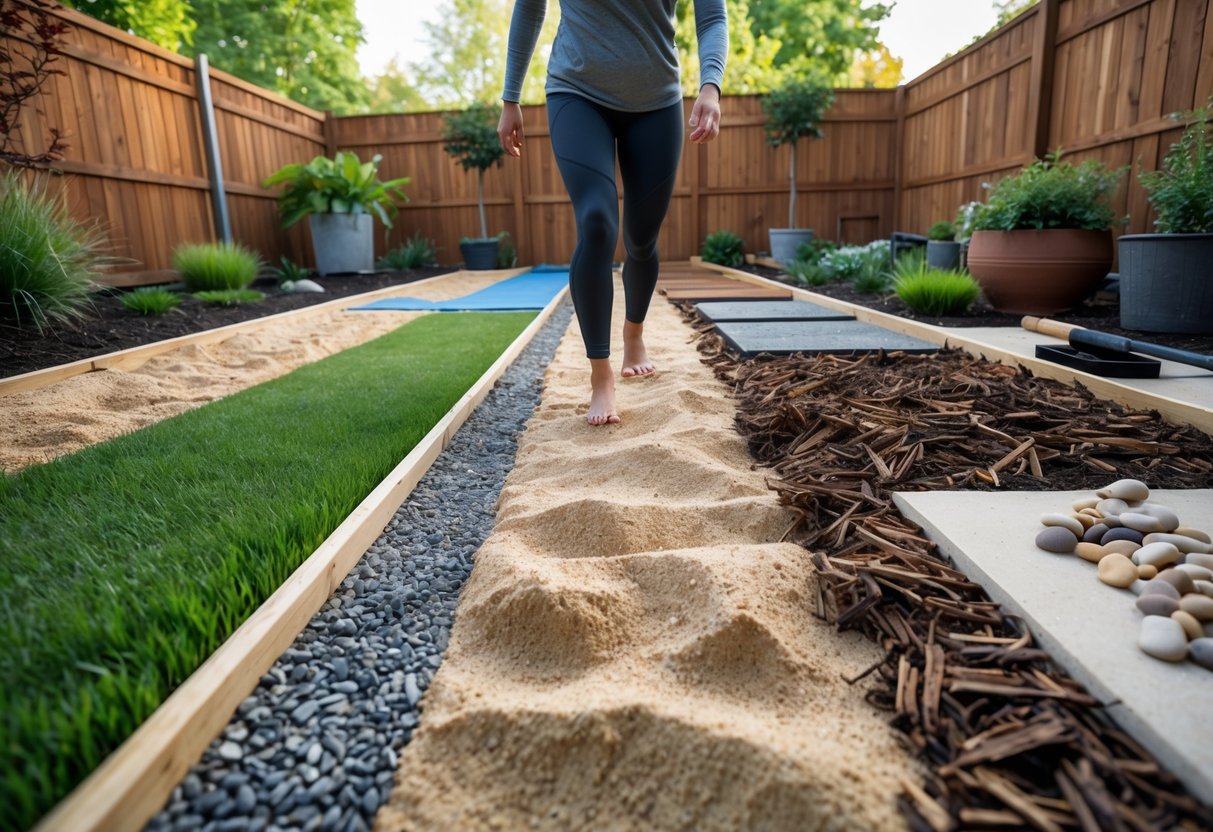
Picking the right surface for a barefoot running track means juggling comfort, safety, and how much work we want to do. Some feel amazing but need lots of upkeep, others are tough but not so friendly to bare feet.
Natural Grass Pros and Cons
Grass is easy on feet and gives the backyard a classic look. It stays cool, feels soft, and most of us already have some growing.
But grass isn’t perfect. It needs mowing, watering, and patching up muddy or uneven spots. It gets slick after rain, and heavy use wears it down fast, especially with kids or pets.
Here’s a quick summary:
| Pros | Cons |
|---|---|
| Soft and comfortable | Needs regular mowing |
| Natural appearance | Can get muddy or uneven |
| Cools in hot weather | Wears down easily |
Mulch, Sand, and Other Natural Options
Mulch and sand both feel good underfoot and add a relaxed, earthy vibe. Mulch drains water well, so puddles aren’t much of an issue. Sand’s soft and forgiving, making it fun for quick runs or play.
But, honestly, both need topping up now and then—they scatter, sink, and just seem to disappear. Mulch can be pokey if the pieces are big, and sand? It’ll sneak into the house on your feet. Weeds might show up, too.
Some folks go for pea gravel. It drains great, but those tiny rocks can sting unless you pack them down really well. Keeping any of these surfaces tidy means you’ll be out there picking up sticks and leaves a lot.
Synthetic Surface Alternatives
Synthetic turf tries to mimic real grass. No mowing, no watering, less hassle overall. It stays pretty flat, so you’re less likely to stub a toe or twist an ankle.
Still, turf can get scorching hot in the sun—sometimes it’s just not barefoot-friendly in summer. The initial install isn’t cheap, and fixing damage isn’t always simple. Some people just don’t love the feel, either—it’s a bit less “alive” than grass or mulch.
Rubber surfaces cushion every step, but they can look a little out of place in a backyard. If you want the lowest maintenance possible, synthetic options are hard to beat, but they lack that wild, natural charm.
Step-By-Step Construction Process
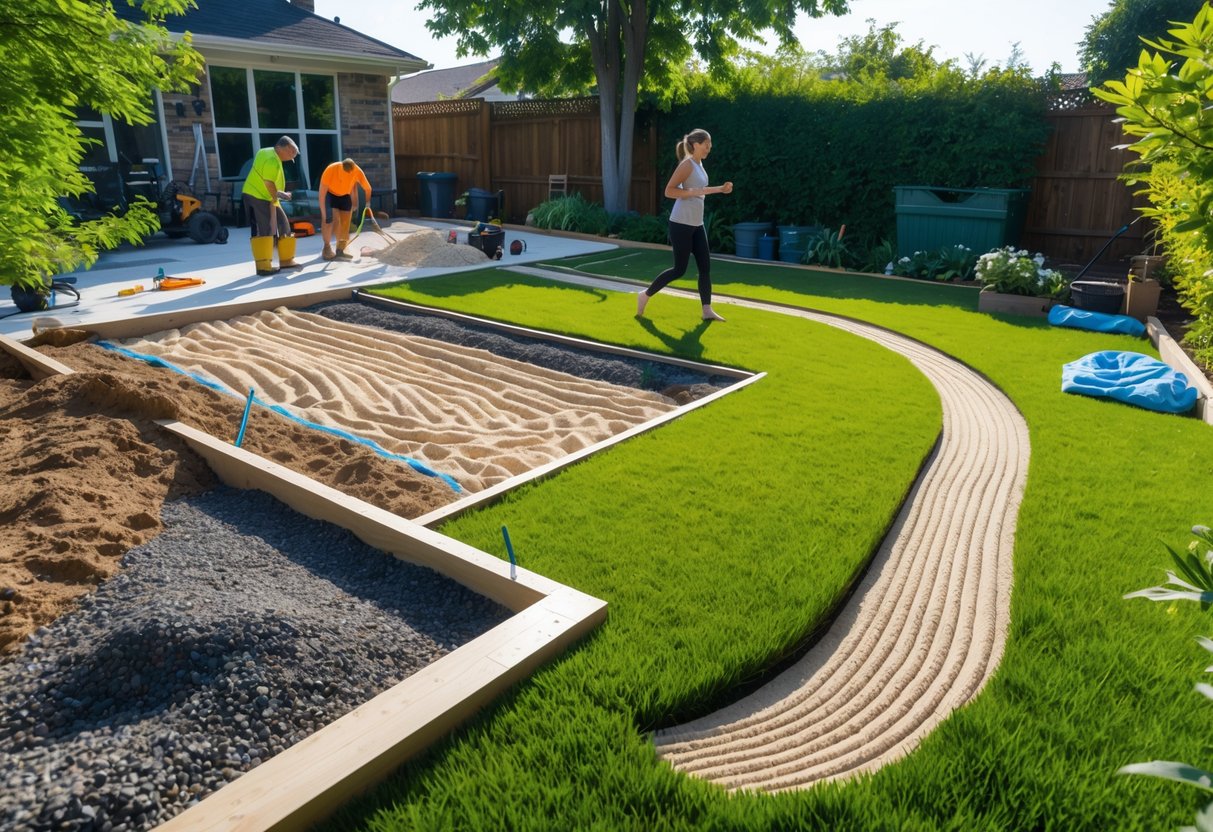
Building a backyard barefoot running track is hands-on but doable. You’ll need to clear the area, handle drainage, and create a soft, safe surface.
Clearing and Preparing the Area
Pick a spot that’s flat and roomy. Mark out your track’s shape with a hose or string. Three or four feet wide usually feels about right for running.
Pull up all grass, weeds, rocks, and roots. Dig down 3 to 6 inches to get rid of anything sharp or uneven. A shovel, rake, and wheelbarrow come in handy here.
Tip: Laying down weed barrier fabric now can help stop new growth. Don’t forget to check for buried cables or pipes before you dig too deep. Smoother, cleaner ground now means happier feet later.
Installing Drainage and Foundation
No one wants a muddy track after rain. Good drainage makes all the difference. If your yard doesn’t slope, dig a shallow trench along the side so water can escape.
Spread 2-3 inches of crushed rock or gravel for a base. Level and tamp it down firmly.
Landscape edging—plastic or metal—along the borders keeps everything in place. Double-check that your base slopes just a bit so water drains away from the middle.
Laying Down the Track Surface
Time for the finishing layer. Most people go with pea gravel, fine mulch, or packed sand. Spread 2 to 3 inches on top, raking it until it’s even.
Smooth, round pea gravel gives a softer feel. Shredded bark mulch or sand brings a more natural look. Avoid anything sharp or rough.
Rake and check for uneven spots or debris. Occasionally, you’ll need to add more material or patch thin areas. A little regular care keeps the track barefoot-friendly.
Safety Tips for Barefoot Runners
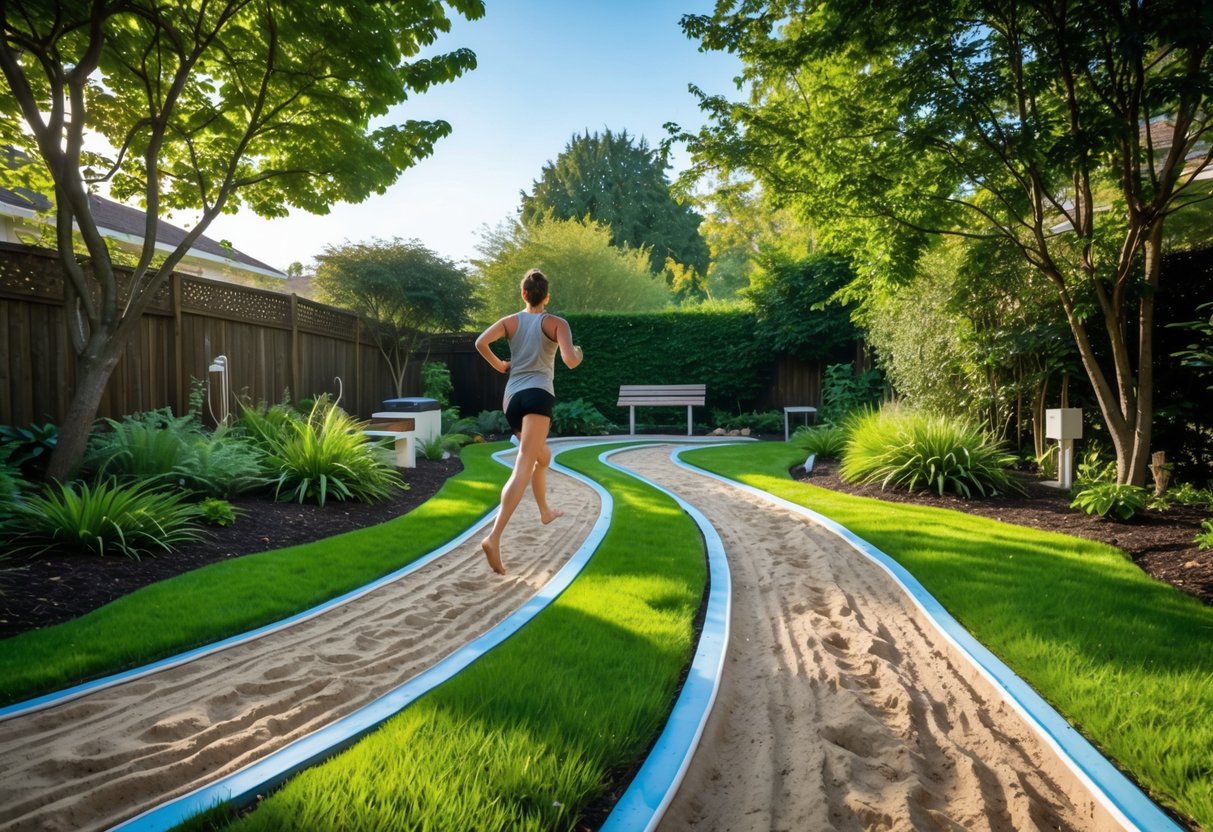
Running barefoot at home feels great, but you’ve got to be careful. A few simple habits can keep your feet safe and your runs enjoyable.
Inspecting for Hazards
Always check the track before running. A single pebble or bit of glass can ruin your day.
Look for sticks, rocks, thorns, or anything sharp. Walk the track slowly, eyes down—it’s worth the extra minute. Storms or wind can bring new debris, so make this a routine.
A leaf blower, rake, or just your hands can clear the path. Fill in holes or level out bumps when you spot them. Watch for loose edging or sprinklers—those are tripping hazards.
Here’s a quick checklist for what to watch for:
| Hazard | Action |
|---|---|
| Sharp objects | Remove right away |
| Holes/bumps | Fill or flatten |
| Wet or slick areas | Wait until dry |
| Lawn tools/toys | Put away |
Protecting Against Pests and Allergens
Bare feet mean more contact with bugs and plants. Mosquitoes, ants, bees, and poison ivy can all be trouble.
Keep grass short and weeds trimmed to spot pests sooner. Sprinkling diatomaceous earth works for ants and ticks—no harsh chemicals.
If you’re prone to allergies, watch for clover, ragweed, or dandelions. If bees or wasps are around, maybe skip your run that day.
Run after mowing and shower right after if allergies are bad. Bug spray on ankles and legs helps, too. You want the track to be a fun spot, not a bug hotel.
Keeping Your Track in Top Shape
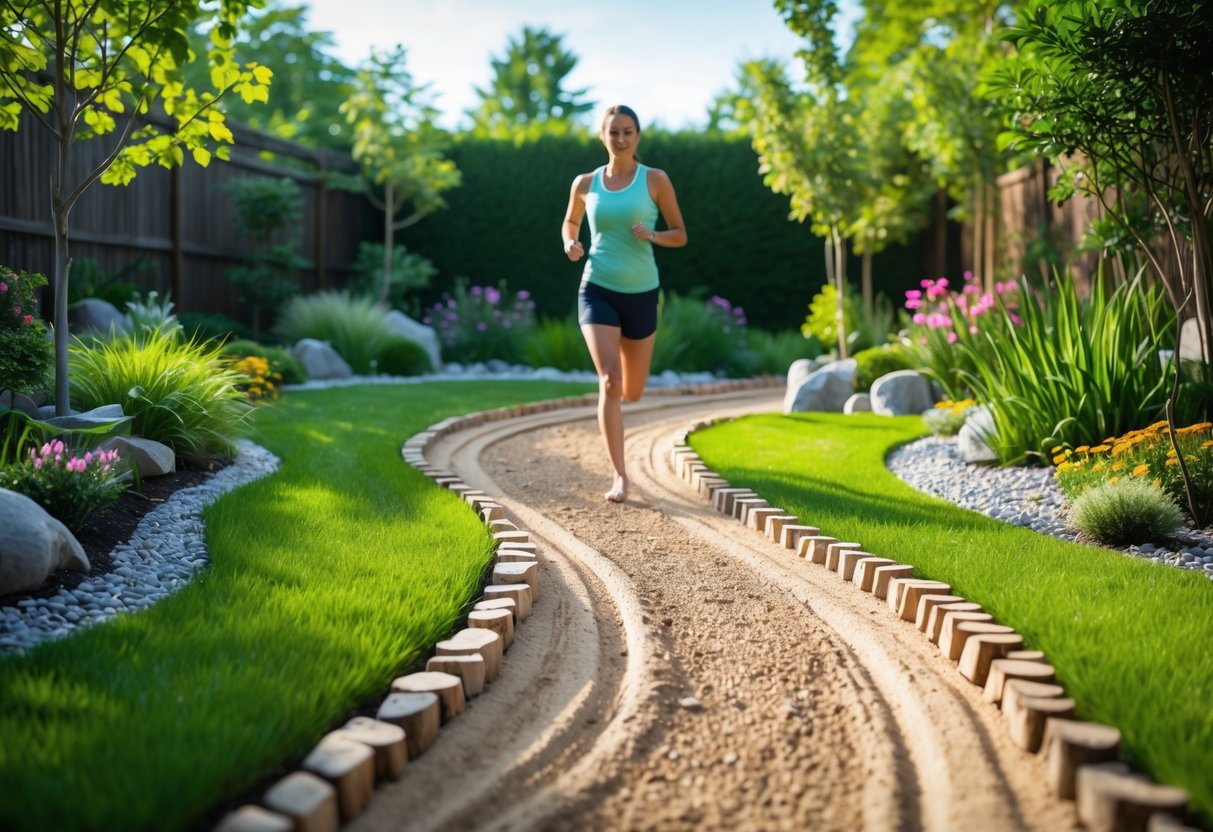
If you want to keep running barefoot with no worries, some regular care goes a long way. Track upkeep isn’t hard, but it’s ongoing.
Routine Cleaning and Upkeep
Walk the track every few days. Pick up debris—sticks, stones, trash—before they become a problem. For natural surfaces, a leaf blower or broom clears leaves and dirt fast.
Check weekly for sharp stuff or animal messes. Rake out muddy spots after rain to keep things even.
If you’ve got pavers or rubber, sweep and hose them off to stop mold and slick spots. Fix little problems before they get big.
Mow the edges, trim branches, and pull weeds to keep things tidy and safe. Here’s a simple checklist:
| Task | How Often |
|---|---|
| Remove debris | 2-3 times/week |
| Inspect for hazards | Weekly |
| Rake and level ground | As needed |
| Sweep/rinse surface | Weekly |
| Trim and mow edges | Twice/month |
Long-Term Care Strategies
Think past weekly chores—seasons matter. Fall brings leaves, spring brings new grass at the edges.
Twice a year, do a deep check. Add new sand, gravel, or mulch where it looks thin. For mats or pavers, look for cracks or loose bits and swap them out.
Snapping a few photos every few months helps you spot slow changes—like low spots or places that get soggy. If water pools, add soil or dig a shallow channel to help it drain.
If critters start digging, maybe it’s time for a bit of fencing or some animal repellent. Handle issues early and your track will stay a safe, fun spot for everyone.
Creative Additions and Personal Touches
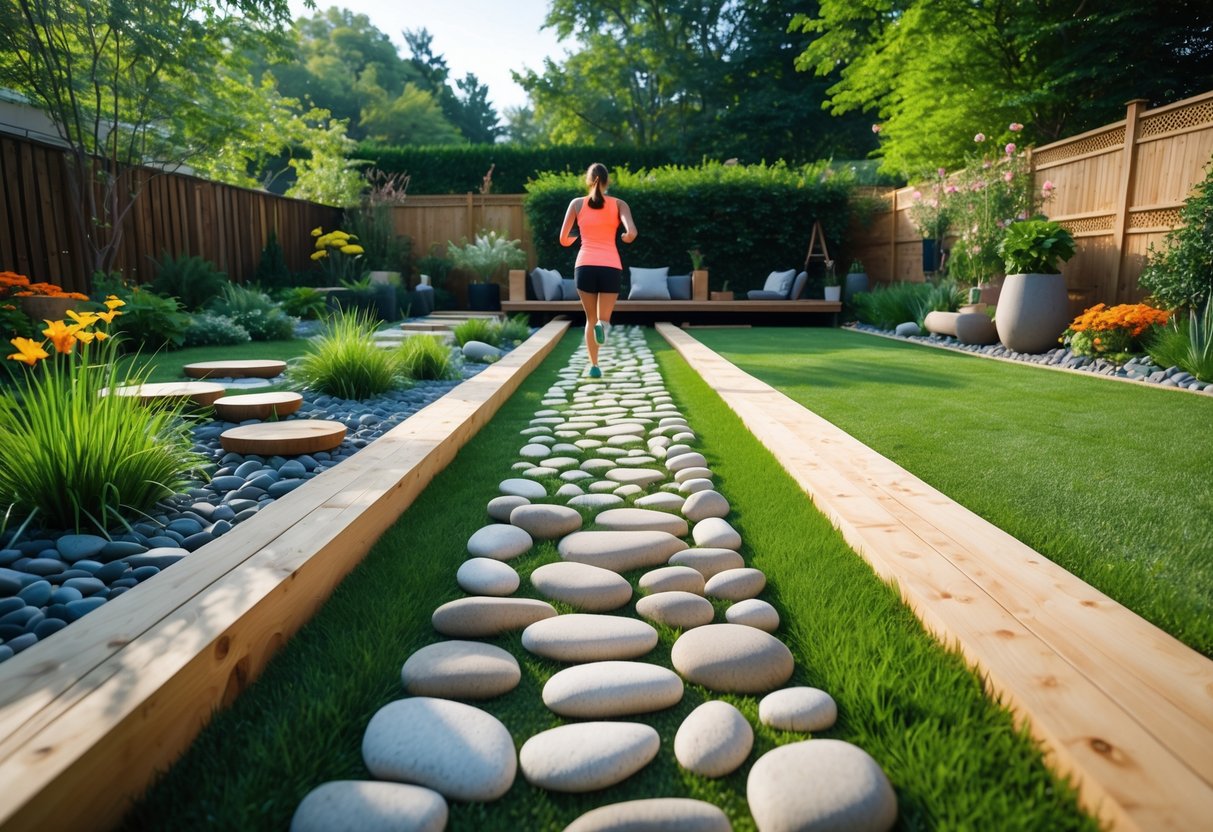
Adding your own touches can make a backyard barefoot track feel genuinely inviting. With a little creativity, you can turn a simple path into a favorite hangout.
Incorporating Landscaping
Landscaping isn’t just about looks—it changes the whole running vibe. Try lining the track with soft ground covers like creeping thyme or clover. They’re easy on feet and add color.
Planting shrubs or small trees nearby brings shade, which really matters on hot days. Fragrant plants like lavender or mint along the edge give you a little boost as you pass by.
Don’t ignore drainage. Pea gravel or a basic French drain beside the track helps keep puddles away. Border stones or wood edging stop grass from creeping in. Here are some easy swaps:
| Standard Grass | Barefoot-Friendly Swap |
|---|---|
| Regular Turf Grass | Creeping Thyme |
| Weedy Edges | Mulch or Smooth Pebbles |
| No Shade | Small Fruit Trees or Bushes |
DIY Track Markers and Features
Track markers help you count laps and add a bit of fun. Painted rocks, homemade signs, or decorated pavers are simple and personal.
You might add playful features—balance beams, log hops, or a section of stepping stones for a new feel. A stretching spot with a bench or mat gives you a place to cool down.
Use weatherproof paint so your markers last. Let everyone in the family design a marker—it’s a fun project and makes the track feel truly yours.
Frequently Asked Questions
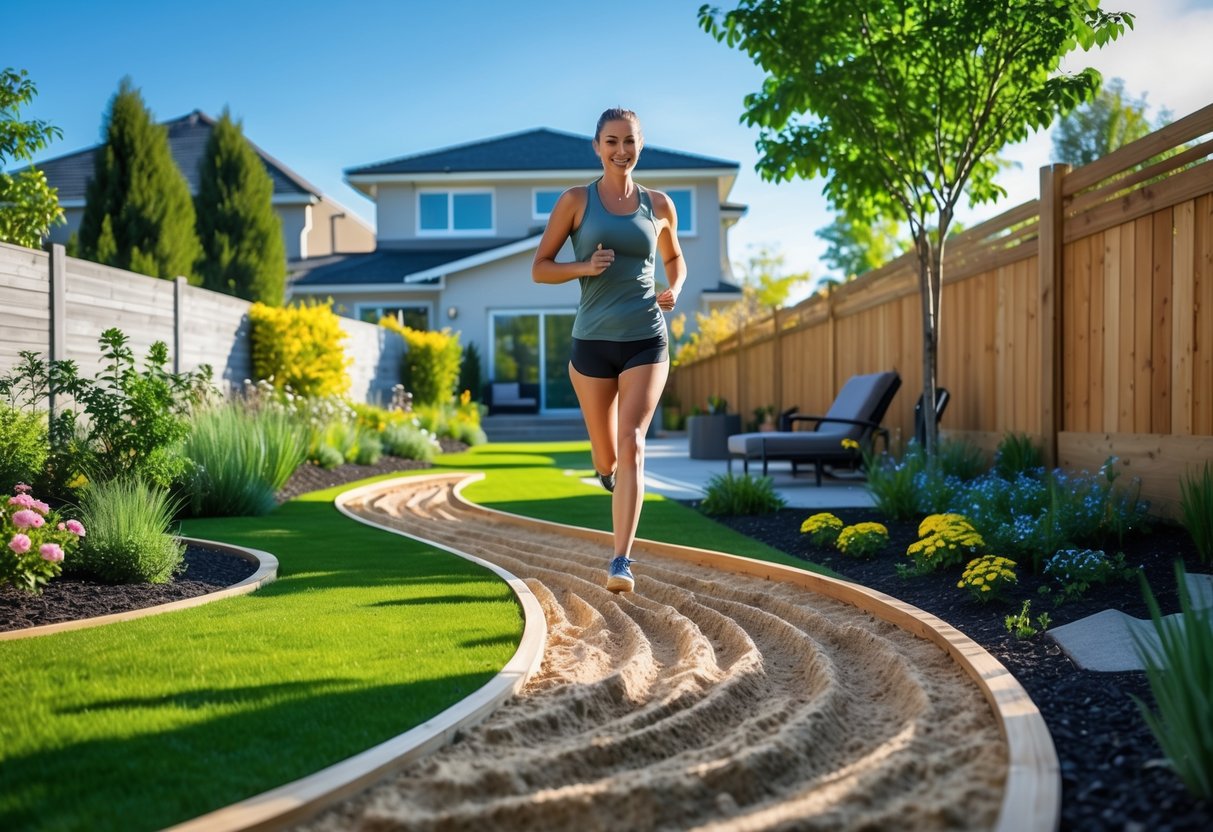
People ask all sorts of things about barefoot running tracks—what’s great about them, how to build one, and what to look out for. Here’s what comes up most often.
What are the key benefits of running on a barefoot track compared to traditional running surfaces?
Running on a barefoot track can help strengthen feet and ankles. You’ll feel more in tune with your body and the ground.
Natural surfaces might be easier on your knees and hips, too. Plus, it’s just a nice change from the usual routine.
Can you give some tips on constructing a safe and effective backyard track for barefoot running?
Pick a flat spot with few rocks or roots. Always clear away sharp stuff.
A track 2-4 feet wide is usually plenty. Use packed dirt, fine mulch, or grass. Weed fabric underneath keeps things tidy.
How does the texture and material of a barefoot running track affect performance and safety?
Softer, smoother surfaces lower your risk of scrapes or bruises. Fine mulch or packed soil feels better than gravel, which can be rough.
Good drainage is key—no one likes a slippery track. Short grass gives the best grip if that’s your choice.
What considerations should be taken into account for maintaining a barefoot running track over time?
Walk your track often and clear out sticks or stones. Watch for holes or muddy spots and fix them.
Add mulch or smooth out dirt when needed. Raking keeps everything even.
Are there any specific downsides to training barefoot that I should be aware of before starting?
You might get more cuts or scrapes if the track isn’t kept clear. Expect some soreness in your arches, calves, or Achilles when you start.
No shoes means more exposure to bugs or hidden sharp bits. It just takes a little more daily attention to keep the track safe.
Could you share some insights on transitioning to barefoot running to avoid common injuries?
Start with short, easy runs—don’t rush it. Give your feet and calves time to adjust; stretching before and after can help with that nagging tightness.
Pay attention to what your body’s telling you. If something feels off, maybe take a rest day. Your muscles and even the skin on your feet need a chance to adapt to this whole new experience.