
There's just something about photographing a perfect reflection on a calm lake or pond—it feels like nature’s own mirror, right? To capture stunning reflections outdoors, we need to look for calm, windless conditions and position ourselves to frame both the landscape and its mirrored image. Even the tiniest ripple can mess with the scene, so timing and patience really matter here.
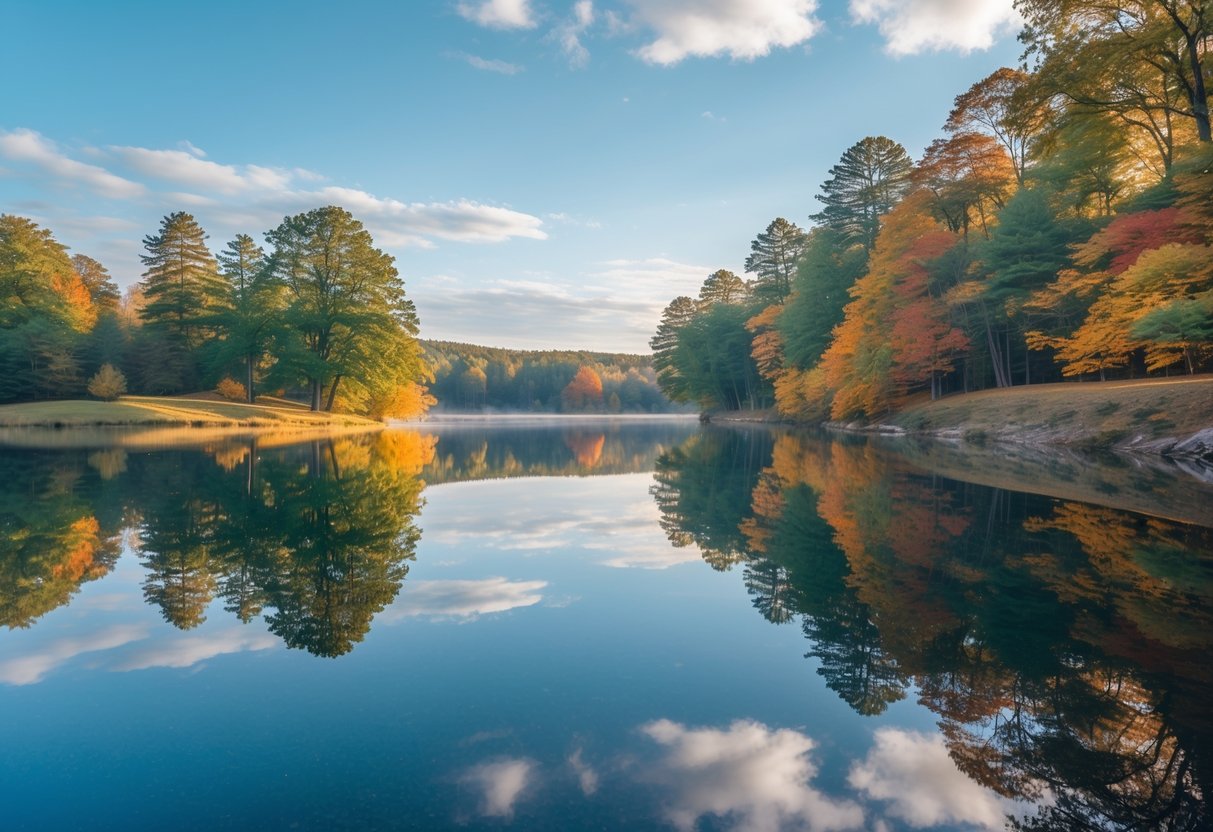
Whether you’re chasing that early morning stillness or trying out different angles, using your gear with intention helps you make the most of every shot. Playing around with composition, light, and focus opens up creative possibilities. If you respect the environment and pay attention to the little details on the water’s surface, you’ll keep finding photos worth sharing.
Key Takeaways
- Shoot during calm conditions for clear reflections
- Use thoughtful composition and camera settings
- Prepare your gear and respect nature during every shoot
Choosing the Best Time for Reflective Lake and Pond Photography
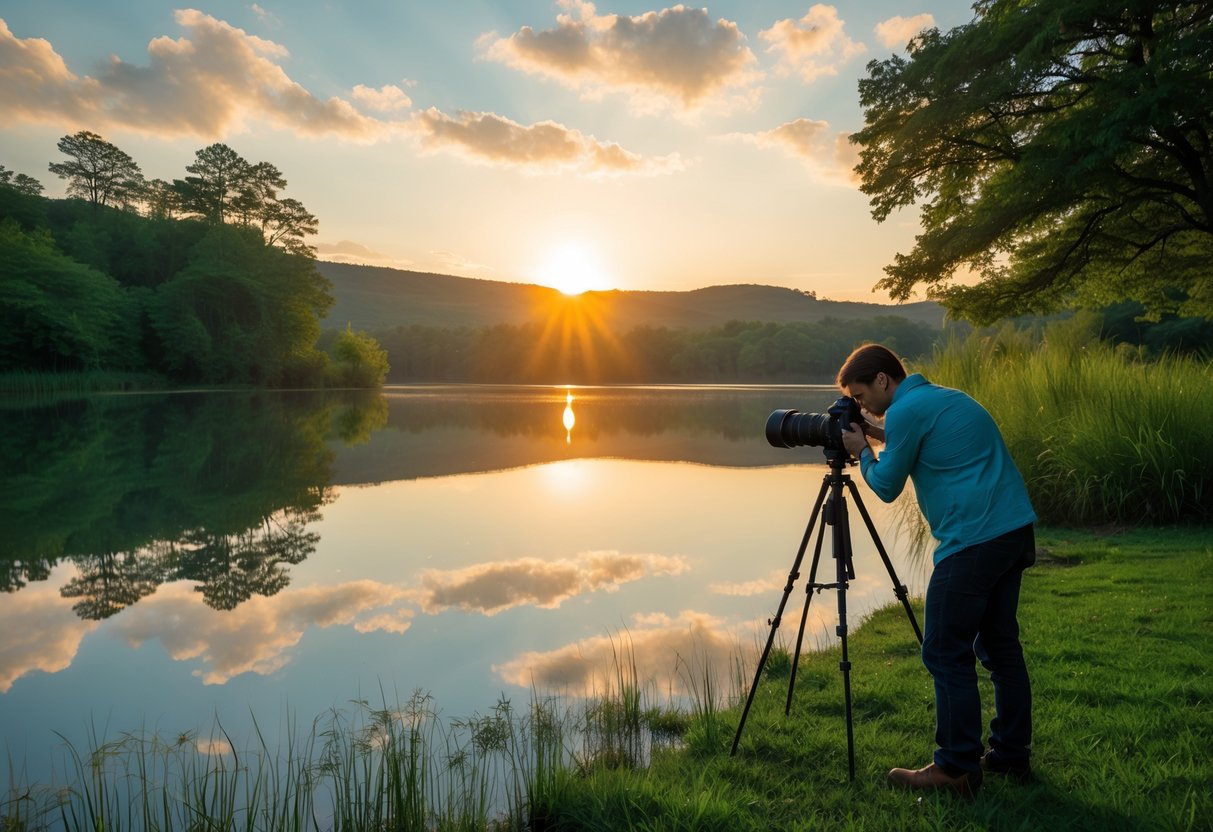
Lighting, weather, and the sun’s angle can change the whole look of your reflection shots. If you want mirror-like surfaces or vibrant colors, these factors matter a lot.
Golden Hour and Blue Hour Benefits
Golden hour—right after sunrise or before sunset—tends to give us the richest colors and calmest water. The warm, soft light at this time boosts the natural glow on both the lake’s surface and its reflections. You can catch dramatic skies without harsh contrasts.
Blue hour, just before sunrise or after sunset, brings a cooler, more peaceful mood. The low light can really deepen blues and purples in the water, creating unique, moody images. Early mornings usually offer the best odds of glass-like water for those pristine reflections. For more on why these times work so well, check out why sunrise and sunset hours reveal wonders at lakes.
Effects of Weather Conditions on Water Reflections
Weather has a direct impact on how sharp or soft your reflections look. Calm, windless days are best because they keep the water smooth. Even a gentle breeze can break up those mirror-like scenes. When the forecast looks settled, that’s your cue to get out there.
Clouds can help, too—they diffuse sunlight for softer photos or add drama as they reflect in the water. Overcast skies might mute colors, but they also prevent blown-out highlights and create even tones. Checking weather patterns ahead of time saves wasted trips and helps you plan shots that fit the mood you want. Curious about timing with calm water? Here’s why wind matters for clear reflections.
Managing Light Direction for Optimal Results
How sunlight hits your scene changes the intensity and detail of reflections. If you shoot with the sun behind you, reflections get brighter and more vibrant, especially with a low sun during golden hour. Shooting toward the sun can look dramatic but risks flares and blown highlights.
Sidelight—where the sun sits to your left or right—adds texture to both the water and the landscape. This can highlight ripples, reeds, or floating objects, making your image feel more three-dimensional. Try shifting your position to see what the light does. If you’re ever stuck, just experiment—sometimes the best angles are the least expected.
Essential Equipment for Capturing Water Reflections
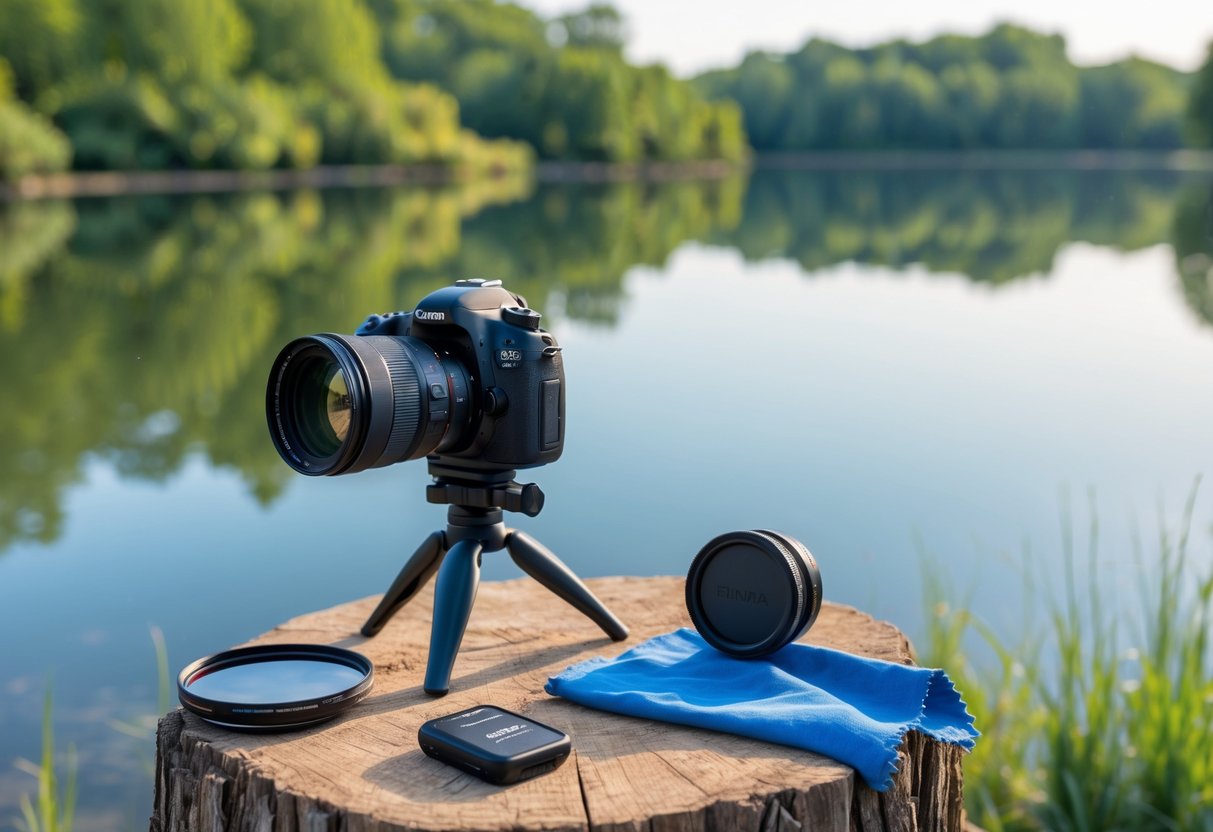
The right gear can be the difference between a muddy blur and a stunning mirror image. Camera choices, support tools, and filters all help you maximize clarity and control the look of reflections in water.
Best Camera and Lens Options
For crisp reflections, cameras with manual controls and RAW shooting are your best bet. DSLR and mirrorless cameras let you fine-tune exposure and focus.
A wide-angle lens (14mm-35mm) captures broad, sweeping scenes and maximizes the reflection. For tighter shots, a telephoto lens lets you zoom in on distant details reflected in the water.
Prime lenses are great for sharpness, but honestly, most kit lenses do a solid job. Autofocus is handy, but manual focus can be more reliable for razor-sharp mirror images, especially when the light is low or contrast is weak.
Weather-sealed gear is a bonus—lakes and ponds can get wet, misty, or dusty.
Using Tripods to Eliminate Camera Shake
A sturdy tripod is a must for sharp reflection photos, especially during golden hour or in low light. Nothing ruins a perfect mirror image like a blurry, handheld shot.
Stabilize your setup with a remote shutter release or your camera’s timer. That way, you won’t shake the camera when pressing the shutter. Spreading the tripod legs wide keeps things balanced, which matters if you’re on rocky or soft ground by the water.
If you’re into long exposures—maybe to smooth ripples and get that dreamy water surface—a tripod is even more critical. Adorama highlights that a reliable tripod is a must for water reflection photography.
Harnessing Polarizing Filters
Polarizing filters help you control glare and tweak water reflections. By rotating the filter, you can cut harsh reflections or, oddly enough, sometimes make them pop even more.
But here’s the catch: a polarizer doesn’t always boost clarity—it can sometimes erase reflections instead. The trick is to experiment until you get the look you want.
On bright days, a polarizer can deepen blue skies and saturate fall colors in the reflection, making the scene really stand out. For shots across a lake, adjusting the filter gives you the most control. Photzy says polarizing filters can be a game-changer for creative water reflection photos. Just remember, polarizers cut light, so you might need longer exposures—another reason to love your tripod.
Finding the Perfect Composition
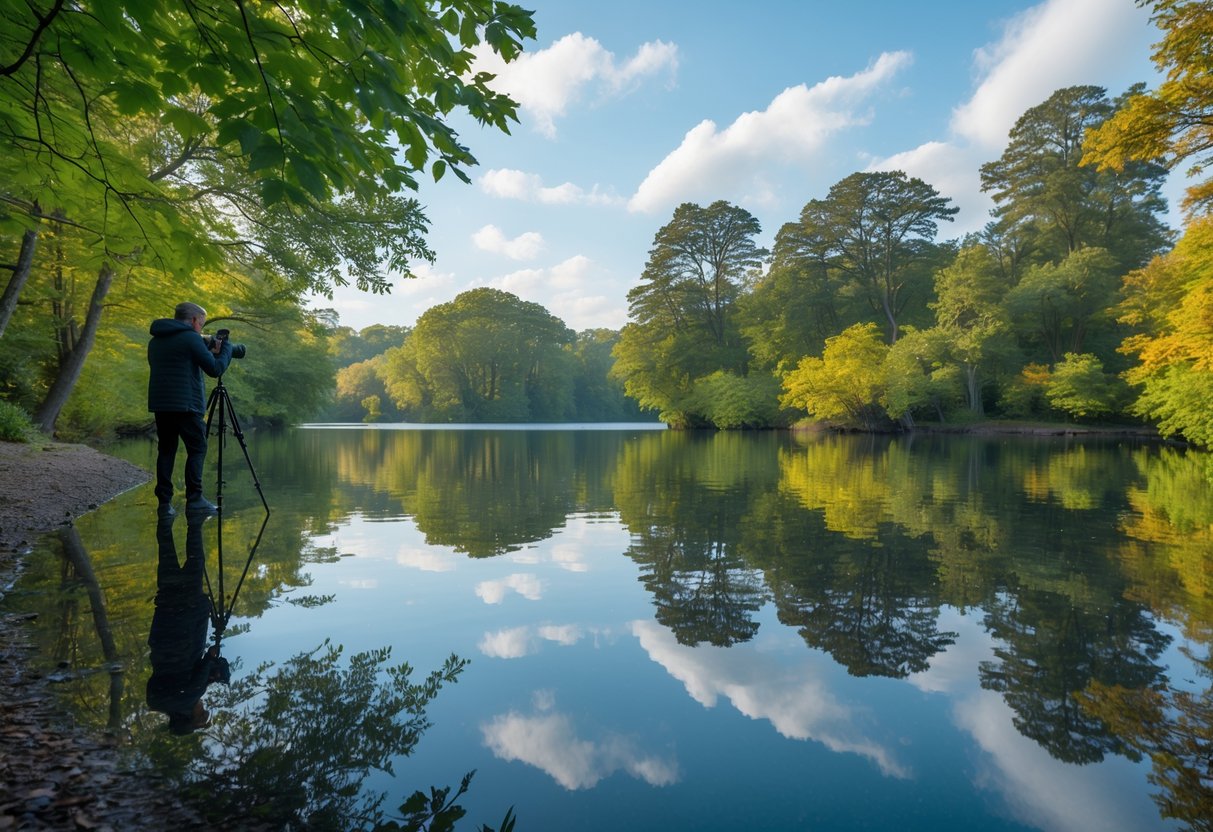
Composing lake and pond reflection shots takes a good eye for angles, balance, and what actually draws you in. You’ll need to make choices about perspective, how much land and water to show, and which elements to put up front for depth.
Choosing the Right Angle and Perspective
Try different vantage points. Getting low to the water’s edge often creates a strong mirror effect. If you climb up a bit, you lose some symmetry but might reveal more shoreline details.
If you want a dramatic, symmetrical shot, place the horizon right in the center. That way, the reflection and the landscape share the spotlight. Watch out for direct light hitting the water—it can cause glare and wash out the reflection. Cloudy days or shaded spots usually give the best results. For tall trees or mountains, step back to capture the whole subject and its reflection without cutting anything off.
Balancing Reflections with Landscape Elements
Decide how much reflection you want in the frame. Sometimes, splitting the landscape and its reflection evenly looks harmonious. Other times, you might want to focus on just the reflection, letting the shoreline act as a divider.
Strong backgrounds—mountain ranges, colorful skies—add punch to your shot. Use curves or zig-zags in the water or shoreline to guide the viewer’s eye. If the sky is interesting, keep it near the top and let the reflection fill the bottom. For a more abstract look, move closer to the water and shoot slightly off-center to highlight ripples, patterns, or colors. Here are more tips on balancing reflections and landscape.
Incorporating Foreground Interest
Add something in the foreground—rocks, reeds, driftwood—for depth and scale. These elements pull viewers into the scene. If the object sits partly in the water, you might get a bonus mini-reflection.
Don’t just settle for what’s right in front of you. Walk along the shore or even get a bit wet to find unique views. Sometimes a branch poking from the water, a patch of flowers, or even the muddy bank adds to the story. Shift left or right to control whether these elements overlap with the main reflection or frame it, keeping everything clean and visually appealing. For more on making pond reflections pop, check these reflection techniques.
Mastering Focus and Exposure Settings
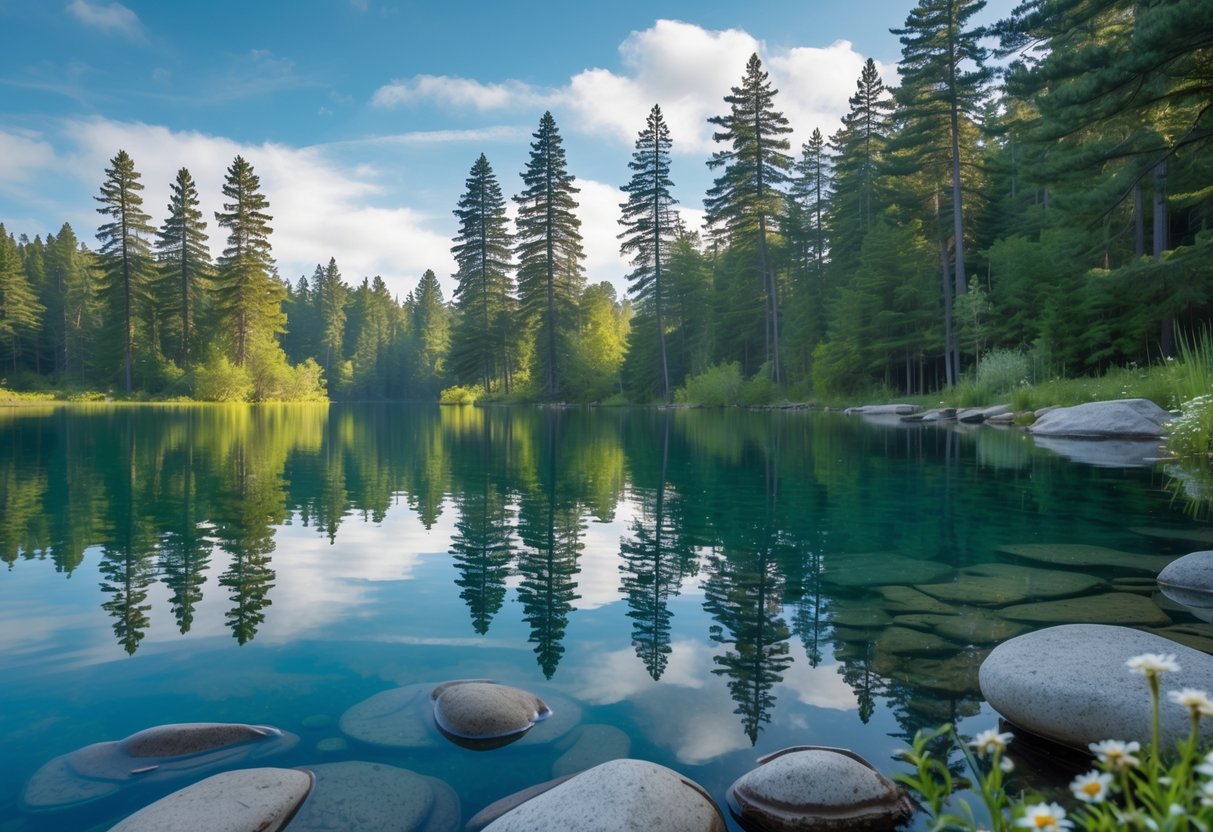
Sharp focus, smart aperture choices, and handling changing light are key for great reflection photos. Dialing in your settings gives you the best shot at crisp, detailed images—even when conditions get tricky.
Manual Focus for Clear Reflections
Autofocus can struggle with shimmering water or low contrast. Manual focus lets you lock onto the reflection or subject with more control. It’s especially handy during those still, glassy dawn or dusk moments.
Use your camera’s live view and zoom in digitally on the reflection area. Gently adjust the focus ring until things look tack-sharp. For scenes with complex foregrounds, focus about a third of the way in—this “hyperfocal focusing” trick keeps everything from the water’s edge to the far shore sharp.
If your camera has focus peaking, turn it on to see what’s sharp. And, yep, a tripod helps by keeping things steady.
Optimal Aperture Choices
Your aperture choice controls how much of the scene stays in focus. For most reflection shots, a small aperture—usually f/11 to f/16—keeps both the water and landscape sharp. This deep depth of field is great when you want everything crisp.
Avoid the tiniest apertures like f/22, since diffraction can soften your photo. On the flip side, wider apertures like f/2.8 work if you want a dreamy blur and aren’t chasing sharpness everywhere. Aperture priority mode makes it easy to fine-tune—let the camera pick the right shutter speed for you. Here’s more on aperture priority mode if you want to dig deeper.
Adjusting Exposure for Dynamic Scenes
Reflections on water can throw off your lighting in a big way, especially when the sky blazes and the land sits in shadow. Shooting in manual mode lets you grab the reins—adjusting both shutter speed and ISO to handle all that contrast.
Spot metering works wonders if you want to save highlight detail in the brightest part of the reflection. Exposure compensation (+/-) is handy for quick tweaks when sunlight gets harsh or shadows run deep, depending on what you want to emphasize.
Those epic sunrise or sunset moments? RAW format is your friend—it gives you wiggle room to fine-tune exposure later. Sometimes, you just need to bracket exposures: shoot several frames at different brightness levels, then blend them in post for a balanced look. If you want more tricks for tricky reflective light, this guide to mastering water reflection photography is worth a peek.
Taming Unwanted Distractions in the Water
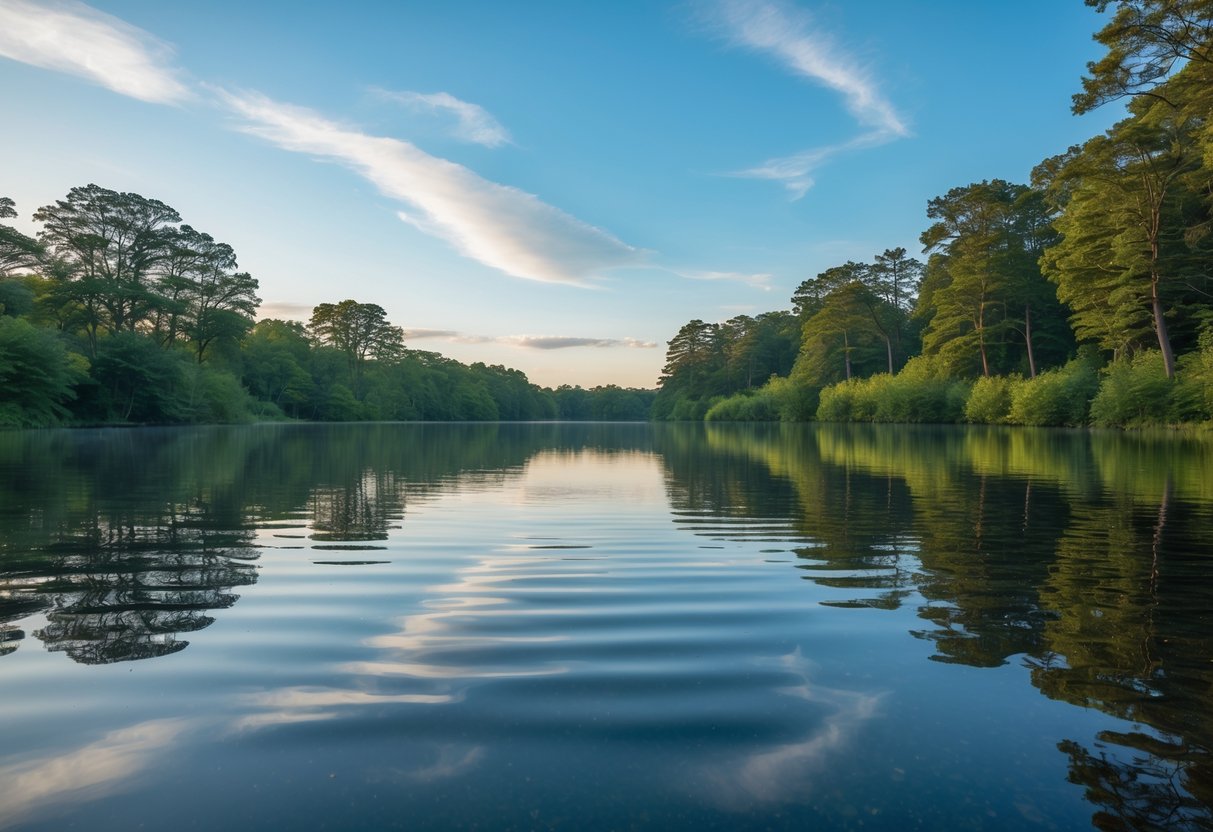
Clean, undisturbed water is key for those mirror-like lake and pond shots. Even a little ripple or a patch of glare can mess up an otherwise solid photo.
Reducing Ripples and Surface Disturbances
Ripples sneak in when a duck paddles by, a breeze stirs things up, or even when you step too close to the edge. Waiting for calm—especially at sunrise or right after the wind dies down—usually pays off. Nature settles down early in the day, and that’s when the water’s at its smoothest.
Standing back from the shoreline helps you avoid making your own waves. If you’re on a dock or a rock, a remote shutter or timer keeps things steady. Sometimes, on small ponds, you can block a stray breeze with an umbrella or your own body.
Patience is your best tool here. Watch the water, wait for a lull, and time your shot. If wildlife is around, let them finish their swim before you click—unless you want them in the picture, of course!
Avoiding Glare and Hot Spots
Sun glare bouncing off water can be a real headache, washing out colors and detail. Polarizing filters are lifesavers. Twist the filter and you’ll see glare fade and colors deepen.
The sun’s angle makes a huge difference. Try to shoot with the sun at your back or off to the side to dodge those blinding hot spots. On clear days, move around until you’re not catching the sun’s direct reflection.
If you still get hot spots, shade your lens with your hand or a lens hood. Overcast days are a bonus—they naturally soften reflections and cut glare, making things a bit easier.
Creative Techniques for Unique Reflection Shots
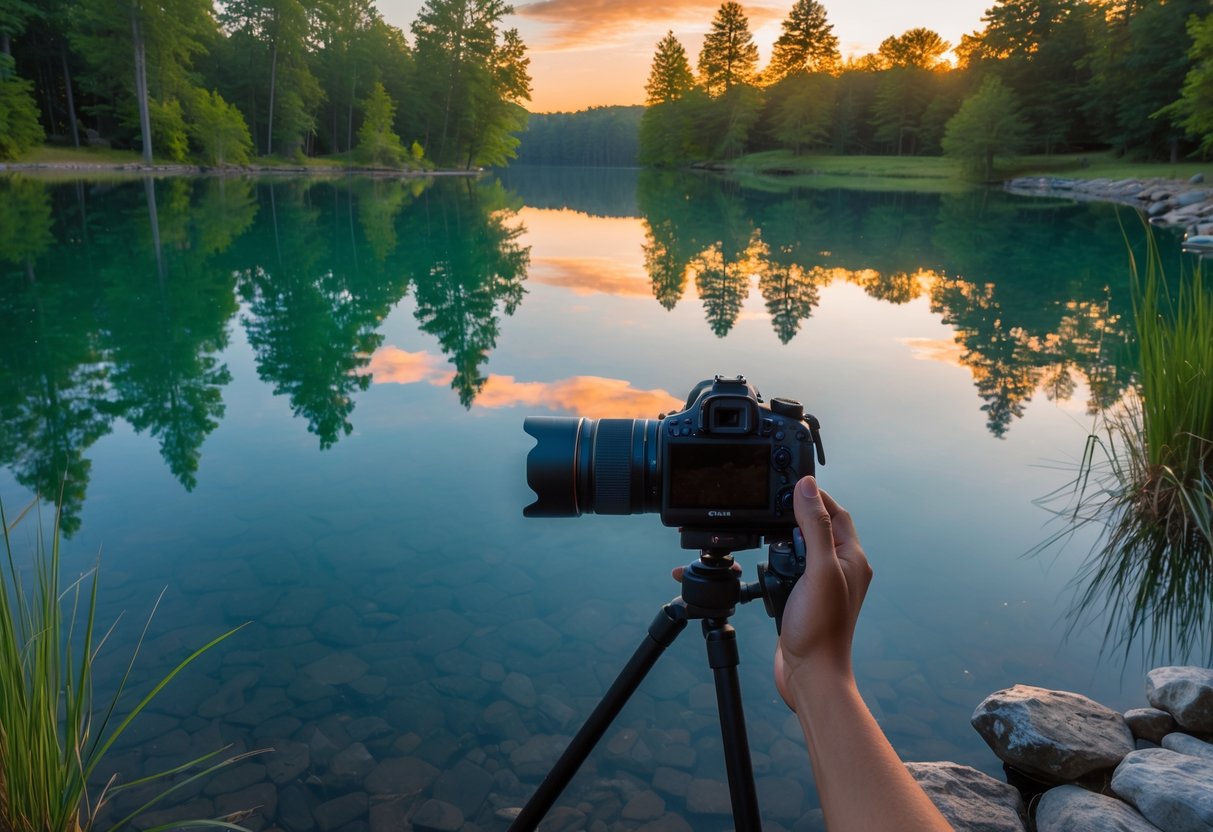
If you want your reflection photos to stand out, you’ve got to do more than just snap a straight mirror image. Playing with composition, timing, and technique can turn a familiar scene into something that makes people stop and look twice.
Symmetry and Abstract Compositions
Symmetry is classic for reflection photography. Center the horizon and you’ll get that satisfying mirrored effect that pulls you right into the shot. This works best on calm, windless mornings when the water’s basically glass.
But hey, perfect symmetry isn’t the only way. Crop in on just the reflection or tilt your camera for a fresh angle—suddenly, you’ve got an abstract that makes people wonder what they’re seeing. Mix in some wild colors or patterns on the water and even a tiny pond becomes a playground for creative shots. Sometimes, breaking the so-called “rules” is what makes a photo memorable.
Quick Tips:
- Try centering the horizon for that classic mirror look.
- Hunt for cool patterns, colors, or distortions—let the water surprise you.
- Fill the frame with just the reflection for something abstract.
Capturing Movement and Dynamic Reflections
You don’t always need still water for a killer reflection shot. Sometimes, ripples or motion make things way more interesting than a static mirror. A gentle breeze can twist the landscape into wavy shapes, giving your photo some real energy.
Add a moving subject—a bird taking off, someone skipping stones—and you inject life into both the scene and its reflection. Timing is everything, so be ready and maybe take a bunch of shots in a row to catch just the right moment.
Highlights for Success:
- Use rippled water for painterly, impressionistic effects.
- Catch people, animals, or clouds in motion.
- Fire off several shots—one will nail the timing.
Experimenting with Long Exposures
Long exposures can turn choppy water into a calm, glassy surface, even on breezy days. Set your camera on a tripod, slow down the shutter, and watch the water smooth out. This trick shines in low light or at night—long exposures pull out details you’d never see otherwise.
If you’re lucky enough to have stars or city lights reflecting, a longer shutter shows off both the scene and its reflection, adding depth. Use a remote shutter or self-timer to avoid camera shake. Play with ISO, aperture, and shutter speed until you get the mood you want. If you’re curious about the nitty-gritty, check out using long exposures for reflection shots.
Pro Tips:
- Use a sturdy tripod—seriously, it makes a difference.
- Try shutter speeds from 1/4 second up to several seconds.
- Check your images as you go so you don’t miss the shot.
Post-Processing Tips for Vibrant Reflections
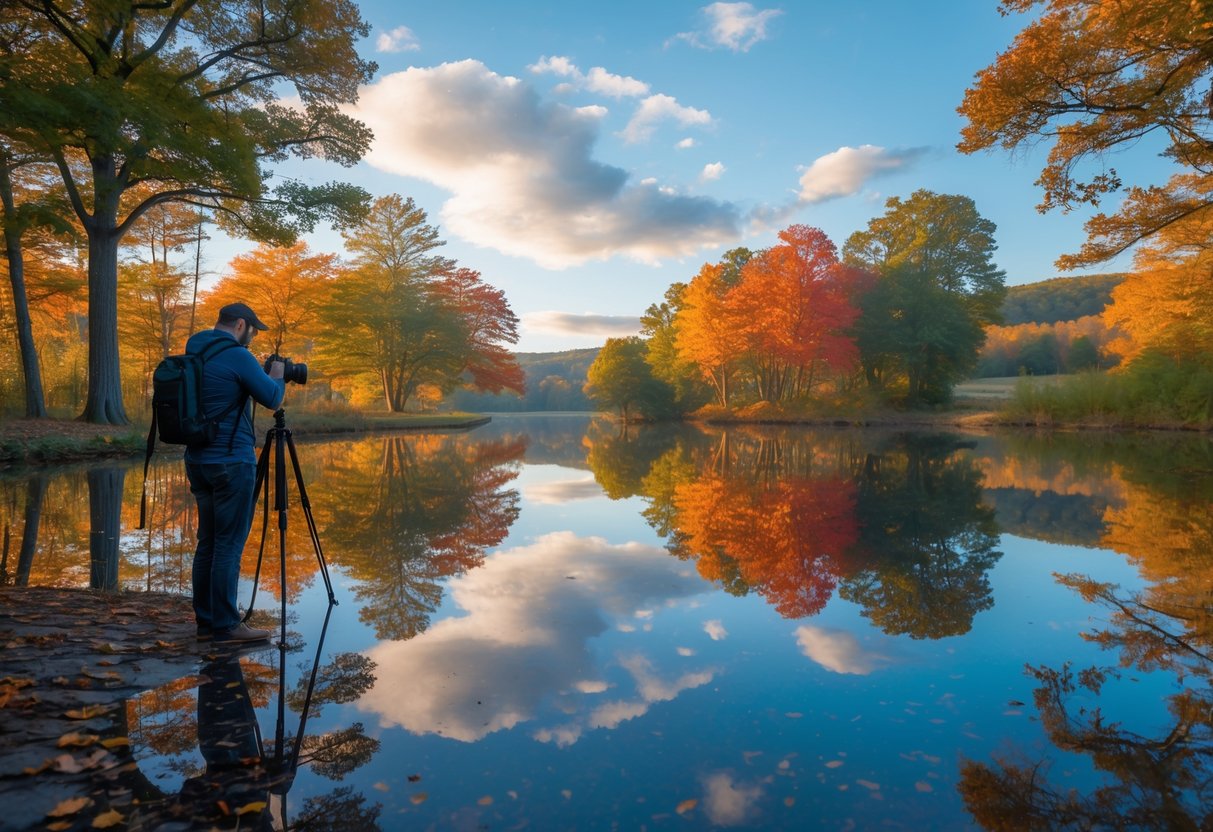
Snagging a beautiful lake or pond reflection is only half the fun. A little post-processing helps those colors and details pop, setting the mood you want.
Enhancing Colors Without Overdoing It
Let’s be honest: colors can make or break a reflection photo, but it’s easy to go overboard. Start by nudging up vibrance instead of cranking saturation—this brings out muted colors without making everything look fake. The HSL (Hue, Saturation, Luminance) panel is great for dialing in specific colors; boosting blues or taming greens can help the sky’s reflection pop without turning grass into something radioactive.
Selective edits are your secret weapon. Use adjustment brushes to paint over just the water, bump saturation a bit, and leave the rest alone. If you’re feeling adventurous, try split toning to tweak highlights and shadows—think warm sunrise or cool dusk. Honestly, if something looks off, it probably is. Dial it back.
Fine-Tuning Contrast and Clarity
Getting reflections to stand out often comes down to contrast and clarity. Increasing contrast can make clouds and trees jump out, but too much and things get harsh fast. Try boosting clarity just in the water for a subtle reveal.
Dehaze tools clear up mist and add depth, but don’t get carried away—too much and your peaceful scene turns gritty. Sometimes, a gentle S-curve in the tone curve does the trick, giving you punch without wrecking that natural vibe you worked for.
Here’s a quick checklist to keep things on track:
| Step | Tip |
|---|---|
| Boost Vibrance | Go slow—no neon, please |
| Use HSL Panel | Blues for water, greens for foliage |
| Target Adjustment | Brush over reflections, not the whole photo |
| Enhance Contrast | Gentle S-curve or spot clarity |
| Dehaze if Needed | Just enough to clear haze, not too much |
Aim to keep the final photo true to what you saw, just with a little extra wow.
Safety and Respect for Nature During Lake and Pond Shoots
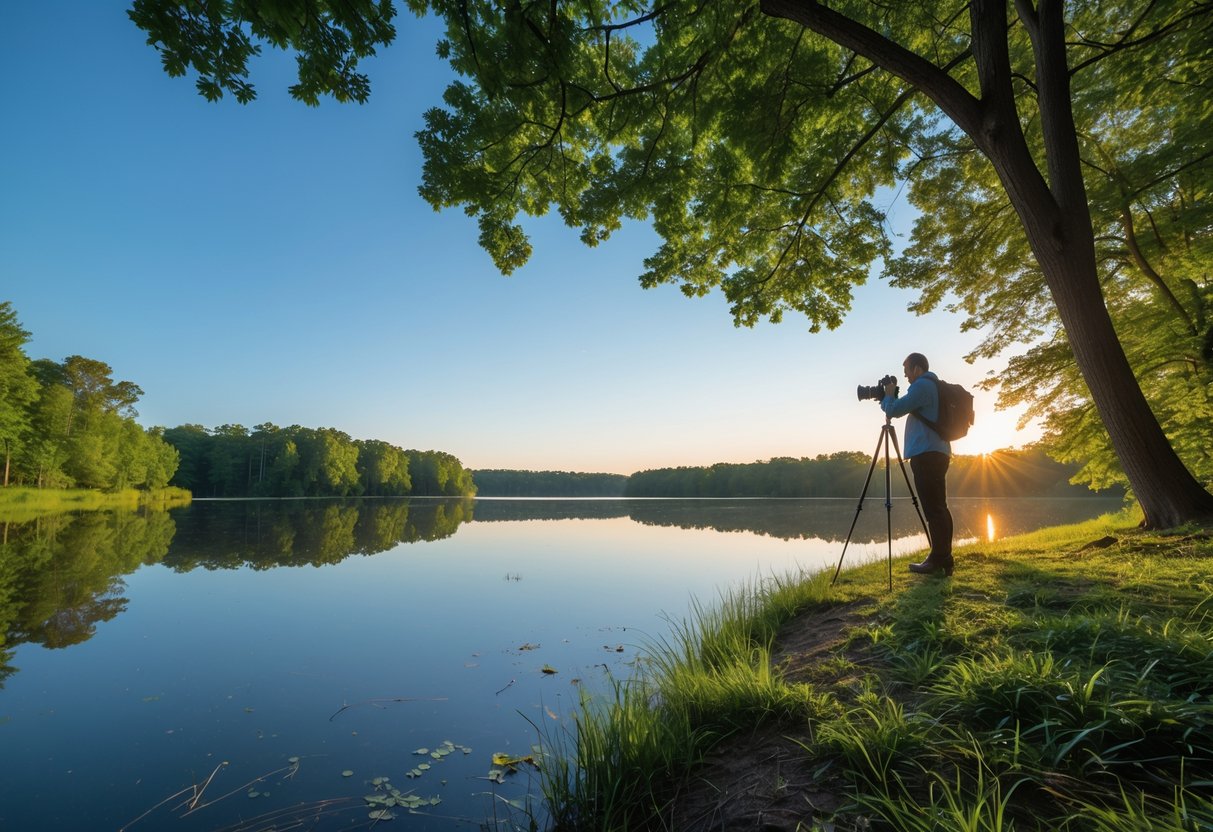
When we’re out chasing reflections at lakes and ponds, staying safe and respecting nature matter as much as the photos themselves. There’s no shot worth risking your neck—or damaging a place you love.
Staying Safe Near Water Edges
Getting close to the water for that perfect angle means dealing with slick rocks, mud, or sudden drop-offs. Look around before you set up, and watch your step. Boots with grippy soles can save you from a surprise swim.
Tell someone where you’re headed and how long you’ll be out. Having a friend along isn’t just more fun—it’s safer, especially off the beaten path. Carry gear in a backpack instead of a shoulder bag, so you don’t lose your balance.
Cold water is no joke, even on a mild day. Check the weather and steer clear of undercut banks or eroded spots. Keep your valuables zipped up, and make sure your tripod is solid before you inch closer to the edge. Let’s stay dry—unless you’re after an underwater shot.
Practicing Leave No Trace Principles
Loving photography means leaving the landscape just as you found it. Stick to existing trails and avoid trampling delicate plants at the water’s edge. If you move a log or rock for your shot, put it back when you’re done.
Pack out all your trash—even the little stuff like lens wipes or snack wrappers. The best reflection shots come from places that stay pristine. Give wildlife plenty of space, and don’t disrupt their routines.
If you’re shooting at sunrise or sunset, keep things quiet. It’s better for the animals and for anyone else soaking up the peace. These habits make sure we can all keep coming back for years of great photos.
Frequently Asked Questions
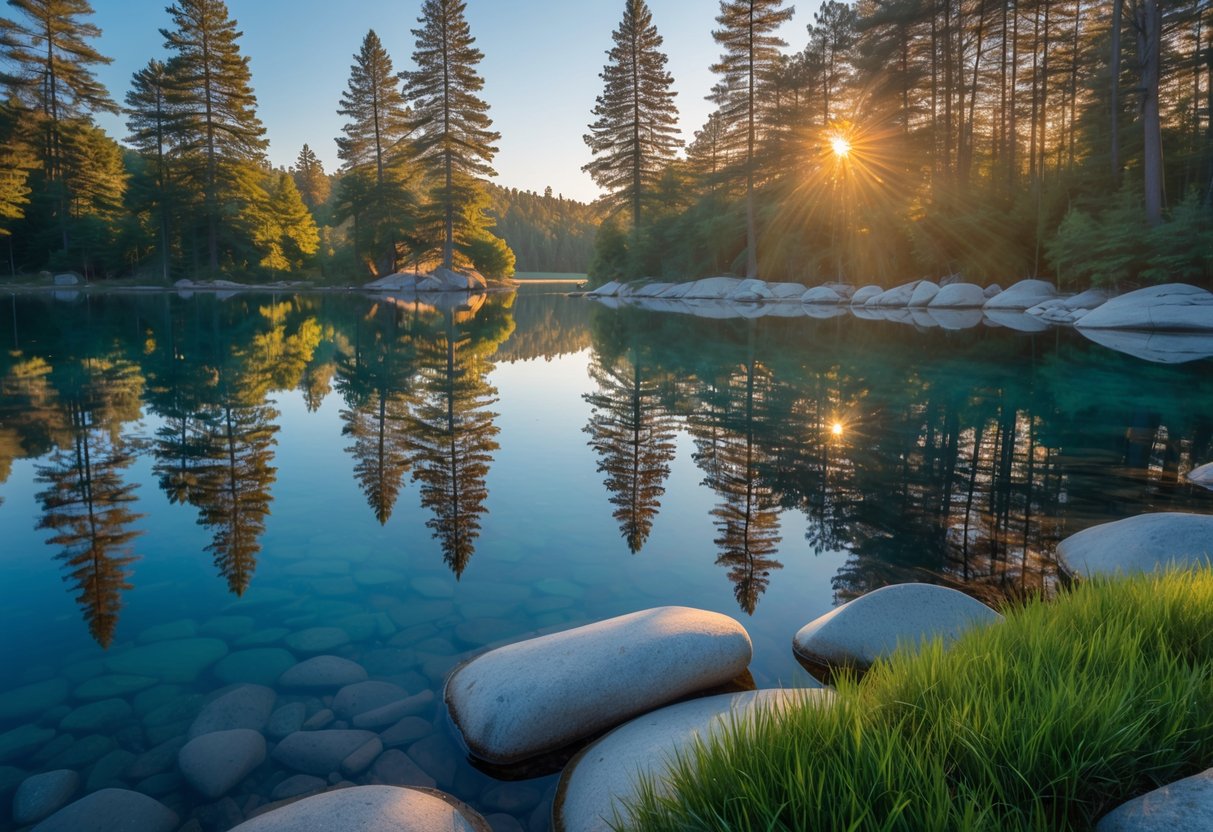
Getting sharp, vibrant reflections on lakes and ponds outdoors comes down to using smart techniques, understanding light, and picking the right gear. Little changes in settings or where you stand can make a big difference.
What are some effective techniques for maximizing reflection clarity in lake photography?
Head out on calm, windless mornings—the water’s usually smoothest then. Position yourself so the sky is clear and the light isn’t too harsh.
Keep your camera steady with a tripod, and pick spots where the water’s undisturbed. For more on this, check out these reflection photography tips.
Can you suggest camera settings for capturing the stillness of water at dawn or dusk?
For crisp shots in low light, stick with a low ISO (100-200), a smaller aperture (f/8 to f/16), and go for longer exposures if you can. A tripod keeps things sharp during slow shutter speeds.
Manual mode gives you more control, so you don’t accidentally blow out the highlights. Use a remote shutter or the timer to keep things steady.
What's the secret to dealing with glare when shooting water reflections?
Polarizing filters are the go-to for cutting glare and unwanted reflections. Adjust the filter while looking through the viewfinder and you’ll see the effect instantly.
Try shooting with the sun at your side, not right in front or behind you. This helps avoid glare and blown-out highlights. There’s more on this in these tips for water reflection photography.
Any tips on choosing the best angles for photographing pond reflections to make them pop?
Get low—shooting from near the water’s surface makes reflections stand out. Look for interesting foregrounds or a dramatic sky to add depth.
Walk around the pond to find the most reflective spot. Waiting for calm conditions after sunrise often pays off, especially on smaller ponds.
What filters should I consider when trying to enhance the reflections on a lake's surface?
Aside from polarizers, I usually reach for neutral density (ND) filters when the light's harsh. ND filters let me slow down my shutter speed, even if it's bright out. That way, I can smooth out those little ripples and make the reflections look almost like glass.
You can just screw these filters onto your lens and tweak them as needed. They're honestly some of the most useful things in my bag. If you're curious about how ND filters can really make a difference, check out this reflection photography guide.
How do I balance exposure when photographing both the landscape and its reflection in a body of water?
Try spot metering or manual exposure to make sure you don't blow out the sky or the reflection. If the scene's dynamic range feels too much, bracket your exposures and blend them later in post-processing—it's a lifesaver for keeping details in both areas.
Honestly, it helps to skip harsh midday sun and shoot during early morning or evening when the light feels softer and the contrast isn't so wild. Keep an eye on your histogram, too; it's easy to lose details if you're not careful.